



Deep Roots and Sassafras Loam: How Salem County Held the Line Against the Sprawl
Drive south from the concrete sprawl of the Northeast Corridor, and the landscape abruptly shifts. The endless distribution centers and subdivisions give way to sprawling fields of corn, historic glazed-brick farmhouses, and vast tidal marshes. You have crossed into Salem County, New Jersey.
It is a fascinating dynamic: Salem County is caught between its deep, 350-year-old agricultural roots and the intense pressures of the modern world. To understand how this quiet pocket of the Garden State has survived as a farming powerhouse, you have to look at the ecology of the ground beneath your feet, the vision of its first English settlers, and a modern battle to preserve an endangered way of life.
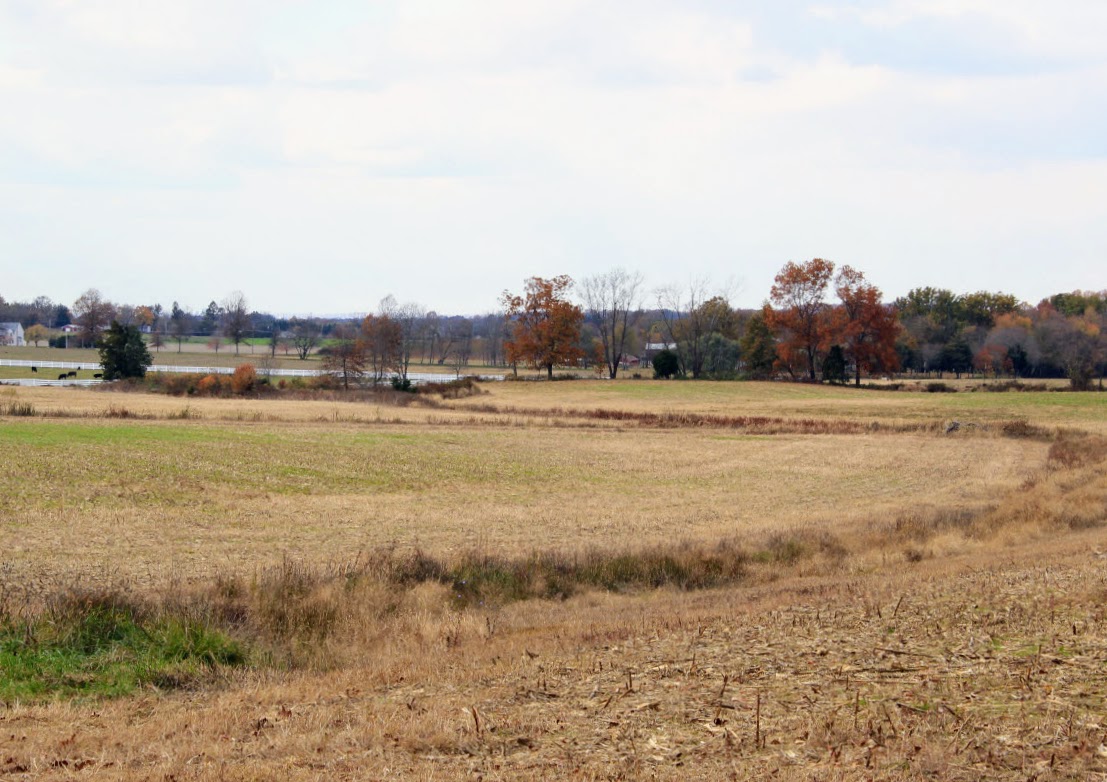
Salem County and its treasured soil for farming. Random fields in Salem County after harvest in the fall.
The Magic in the Mud: An Ecological Masterpiece
Salem County’s agricultural dominance wasn’t an accident of history. It was engineered by millions of years of ancient oceans. Sitting entirely on the Inner Coastal Plain, the county is blessed with a unique geological makeup. Instead of sitting flat, the ancient layers of marine sediment tilt slightly downward toward the southeast. Over millions of years, erosion wore away the softer layers, leaving behind gentle, asymmetrical ridges and broad, shallow valleys.
Here, the land is blanketed in prime, well-draining soils like Sassafras and Alloway loams. (Alloway loams are localized, nutrient-rich soils that occur naturally near the local creeks and stream corridors of Salem County.) These soil types are designated by the USDA Natural Resources Conservation Service as premier soils for crop production. Packed with ancient marine nutrients, they sit atop vast, shallow freshwater aquifers as well.
Bordered by the Delaware River and deeply penetrated by tidal creeks, the county enjoys a moderated microclimate and a gentle, rolling topography. This gentle, rolling topography provides natural surface soil drainage of heavy rains while retaining crucial moisture during summer droughts. It is, quite simply, an ecological masterpiece built for growing food.
John Fenwick and the Original Landowners (1675)
When Major John Fenwick arrived from London in 1675, he founded the first permanent English-speaking settlement in the Delaware Valley. He brought with him nearly 200 people—Quakers seeking religious freedom, family members, and indentured servants.
Fenwick, acting as the absolute proprietor of the “Salem Tenth,” played favorites. He surveyed the land and handed the absolute best, most well-draining prime tracts—those rich Sassafras loams near the navigable tidal creeks—to his immediate family and loyal inner circle.
- The Sons-in-Law: He granted his son-in-law Samuel Hedge Jr. 2,000 prime acres in Upper Mannington, naming it “Hedgefield.” His other sons-in-law, John Adams and Edward Champney, also received massive, highly fertile tracts.
- The Original Purchasers: Families like the Wades (Edward and Robert), Nicholsons (Samuel), Pledgers (John), Nevils (James), and Hancocks (Richard) were granted huge swaths of prime land right along the vital waterways of Alloways Creek and the Salem River.
Descendants of the Nicholsons, Wares, Smarts, and Hancocks are still living and farming the soil in the county today. Descendants of Samuel Nicholson, for instance, built a glazed brick home in 1752 on Amwellbury Road that still stands as a monument to their enduring presence.
The epicenter of these surviving, multi-generational farming families lies in Mannington Township, Alloway Township, and Lower Alloways Creek. These areas hit the geographical jackpot. Because the soil here was so phenomenally productive, these early families amassed enough wealth to weather centuries of economic storms. Furthermore, these townships sit far enough away from modern urban decline and massive interstate corridors to avoid the squeeze of the 21st-century economy.
Why the Sprawl Stalled: A Deeper Dive
While neighboring Gloucester and Camden counties were aggressively developed over the last 50 years, Salem County’s historical lack of suburban sprawl comes down to a few stark realities:
- The Transportation Infrastructure Gap: Developers want fast, immediate access to highways. The New Jersey Turnpike, Route 55, and the Atlantic City Expressway completely bypass the vast majority of Salem County. While Oldmans Township at the northern tip sees commercial growth along with Carneys Point Township thanks to Interstate 295, the agricultural heart of the county is accessed mostly by slower, two-lane rural roads. It simply wasn’t efficient for mega-developers.
- Industrial Exodus: During WWII and through the mid-20th century, the western side of the county boomed due to massive DuPont chemical plants and local glass manufacturing. When those industries severely declined in the 1980s, the local economy cratered. As people left to find work, the housing market stagnated. Developers simply do not build massive housing tracts in areas with declining job markets.
- Environmental Constraints: Salem County is bordered by the Delaware River and heavily crisscrossed by delicate tidal marshes. With a significant portion of the western county sitting in the 1% and 0.2% annual chance flood zones, building massive developments on top of protected, flood-prone marshland is a logistical and legal impossibility.
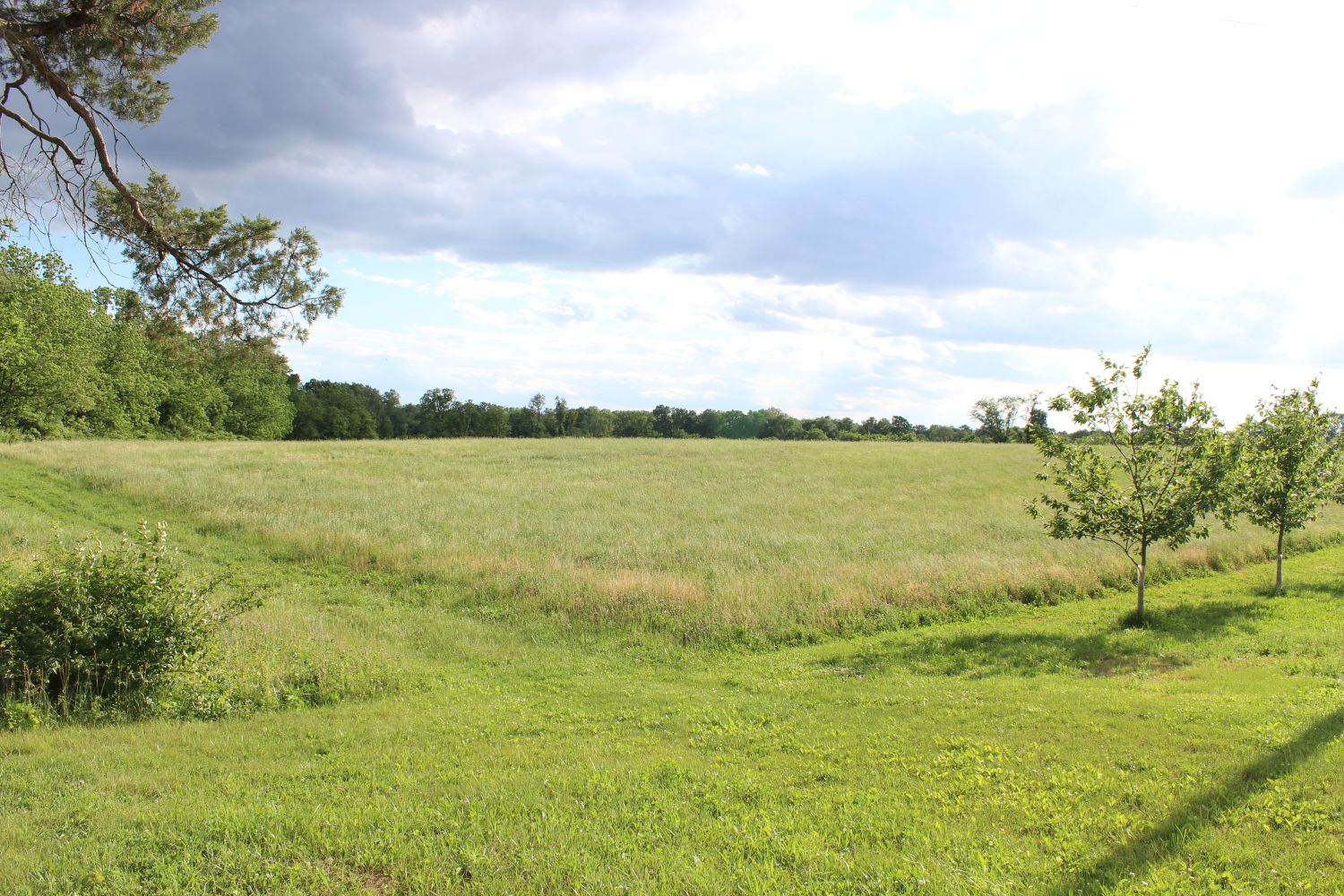
Mannington Twp. Field in late Spring 2026. Located off of Swedes Bridge Road.
Holding the Line: The Real Effects of Farmland Preservation
Today, the threat of e-commerce warehouse sprawl is ever-present, but Salem County has mounted a fierce defense. Over the last few decades, it is the undisputed champion of farmland preservation in New Jersey. As of recent milestones, the county has permanently preserved over 43,000 acres of this unique land across more than 400 individual farms.
The effects of this aggressive preservation are profound:
- The “Critical Mass” Effect: Farming requires infrastructure—tractor dealerships, heavy-duty mechanics, feed mills, and specialized veterinarians. By permanently preserving contiguous blocks of thousands of acres, the county ensures that this agricultural support system survives. If farms become isolated islands in a sea of suburbs, those support businesses close, and the remaining farms suffocate.
- Stopping the “Domino Effect”: When a developer buys a farm to build a subdivision, property taxes for the surrounding area often skyrocket to pay for new schools, roads, and sewers, inevitably forcing neighboring farmers to sell out. Preservation breaks this cycle. By permanently restricting the land’s deed solely to agriculture, its value is artificially capped, keeping the land and its soil affordable for the next generation of farmers.
In Salem County, the dirt isn’t just soil; it’s a 350-year-old inheritance. Through a stroke of geological luck, an enduring pioneer legacy, and fiercely modern conservation, this quiet corner of the Garden State proves that sometimes, the most valuable thing you can do with the earth is let it GROW.