


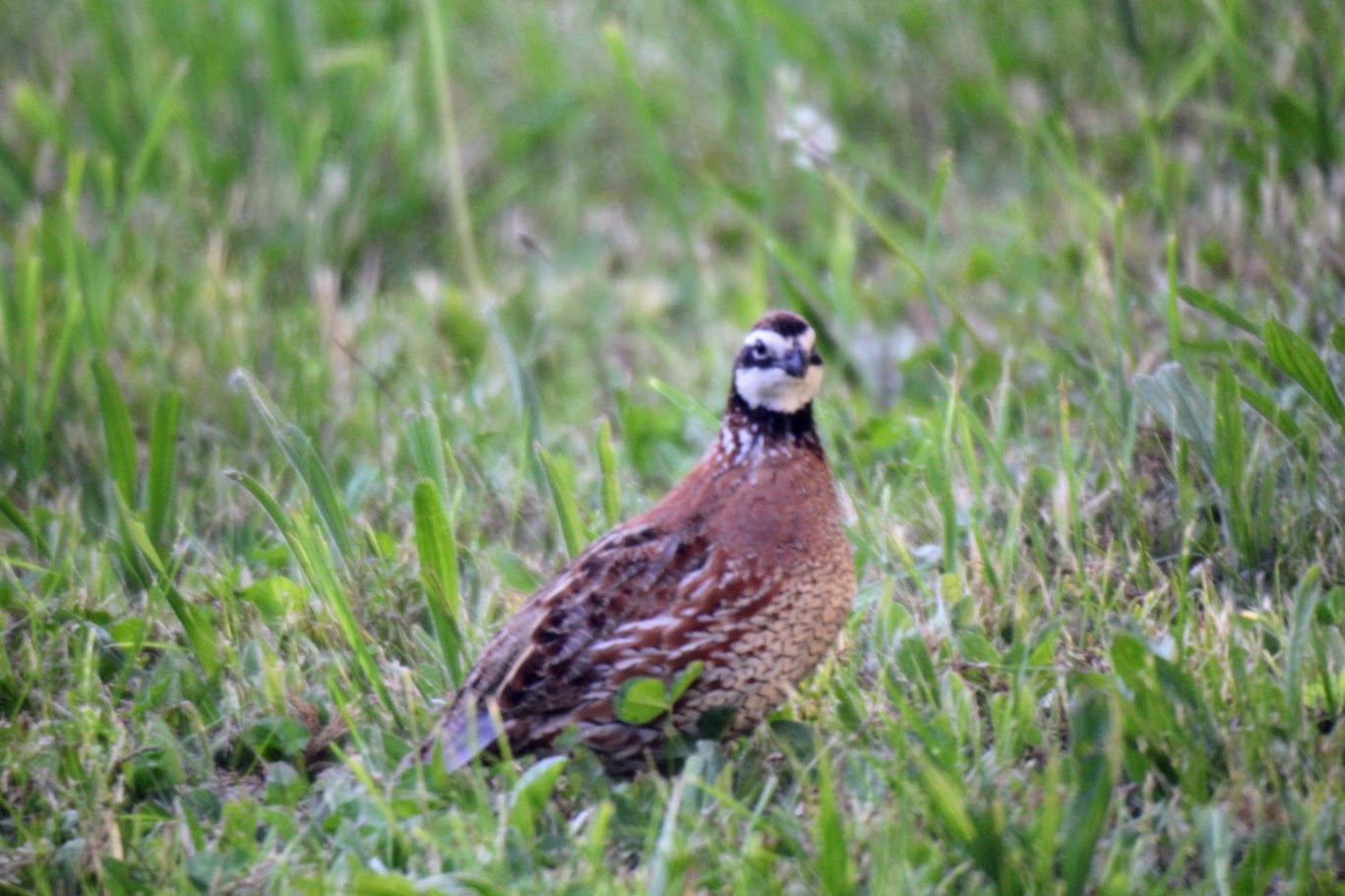

Local birdwatchers and residents in Alloway Township have reason to keep their eyes glued to the brush. A rare, native treasure has made a surprise appearance: a Northern Bobwhite Quail has been spotted and photographed in the wild by our very own Sara Morgan earlier this spring.
While captive-bred game birds are frequently released for hunting, they rarely survive long in the wild. This makes the recent local sightings—particularly concentrated in the Thundergut area along Telegraph Road (Route 540)—both highly unusual and incredibly exciting for the community.
A Species on the Brink
The Northern Bobwhite holds a “Near Threatened” status globally, but its local and national decline over the decades has been staggering:
- The National Crash: Across the United States, annual bobwhite populations have plummeted by 85% over the last 50 years.
- The Local Disappearance: In New Jersey, the downward spiral began as early as the 1860s. Before these recent Alloway sightings, the last confirmed glimpse of a truly wild, native bird in South Jersey occurred in 2009. Biologists have considered the species “functionally extinct” in the wild across the region for over a decade.
- The Hunting Ban: To protect the remaining remnants, the New Jersey Fish and Game Council enacted a statewide hunting closure for wild bobwhites starting with the 2011–2012 season. The season will only reopen if populations rebound to a specific benchmark—specifically, a three-year average matching the 1980 Breeding Bird Survey levels.
The Ideal Habitat vs. The “Ecological Trap”
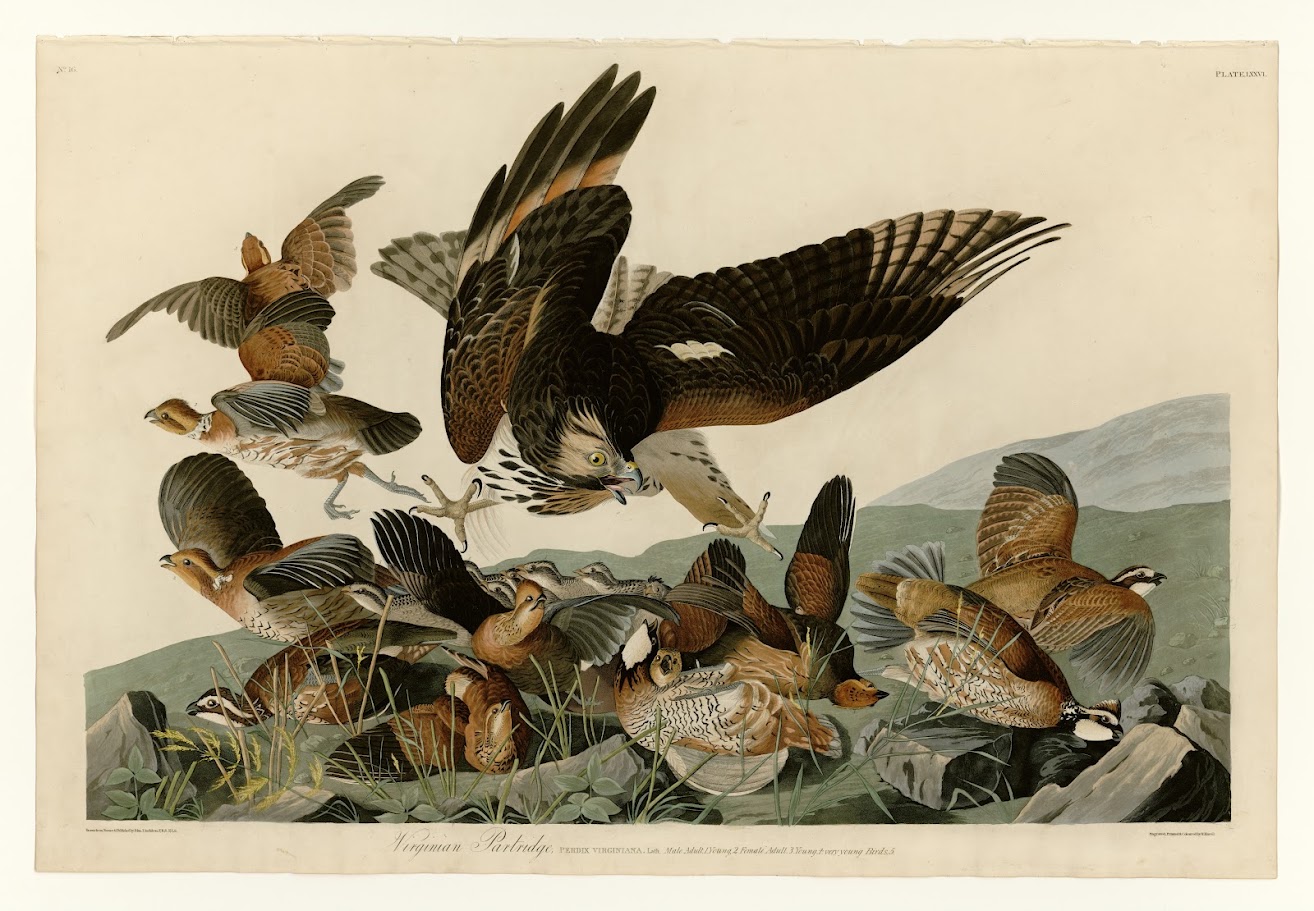
What makes a perfect home for a bobwhite? Wildlife experts frequently reference Herbert Stoddard’s iconic 1931 book, The Bobwhite Quail: Its Habits, Preservation and Increase (often called the “quail bible”), which outlines a precise “one-third” vegetation equation required for the species to thrive:
- One-Third Grasses: Clumps of native bunch grasses (like bluestem or Indian grass) provide secure nesting sites.
- One-Third Forbs & Legumes: Plants like ragweed and partridge pea provide vital food seeds and leave open ground underneath for easy travel.
- One-Third Low, Woody Species: Thickets of blackberry, plum, or oak scrub give the birds quick escape and roosting cover from predators.
Unfortunately, South Jersey’s modern landscape rarely fits this bill. Human-driven changes have turned existing fields into a perilous gauntlet:
- Development vs. Restoration: New Jersey historically loses an estimated 14,000 acres of land to urban development annually. By comparison, conservationists only manage to improve about 3,450 acres per year—a losing mathematical formula for the quail.
- The Trap of Isolation: A landscape spatial model predicted that while 800,000 acres of potential habitat exist in South Jersey, a mere 18% of it is actually occupied. Because remaining patches are so small and fragmented, they act as “ecological traps”. Birds are forced into unusually large home ranges (averaging 86.6 acres in the breeding season) just to forage, exposing them to intense predator pressure.
- Fire Suppression & Modern Farms: Decades of suppressing natural forest fires have left pine understories choked with dense scrub instead of open grasses. Meanwhile, modern “clean” farming practices and heavy chemical pesticide use have wiped out the insect populations that quail chicks strictly rely on to survive. (The Pine Barrens is a fire-dependent ecosystem where native plants and animals have evolved unique biological adaptations to survive, regenerate, and thrive off of frequent wildfires. Without consistent burns, the ecosystem becomes overgrown and vulnerable even worse forest fires.)
Supreme Odds: A Sprint Against the Clock
Even under the best environmental management, a bobwhite’s life expectancy is remarkably short. They face a combination of harsh biology and relentless predation.
Quail Survival & Mortality Breakdown
| Survival & Mortality Metric | Stat Value | Impact on the Species |
| Annual Adult Mortality (NJ) | 91.4% | Leaves a dangerously low percentage of adult birds to sustain the population year-over-year. |
| Predation-Driven Deaths | 85.5% | The primary cause of mortality, dominated by avian predators (43.5%) and domestic/feral cats (10.1%). |
| Chick Survival (to 3 Months) | 36% | A major biological bottleneck; improving this by just 10–15% would yield massive recovery gains. |
| Pen-Reared Breeding Survival | < 3% | Proves that releasing captive-bred game birds lacks the survival instincts needed to establish wild populations. |
| Average Life Expectancy | ~6 Months | Forces the species into a fragile, high-stakes race against time to successfully reproduce. |
Rebuilding the Northern Bobwhite Population on Private Lands
Because public lands alone aren’t expansive enough to reverse a continental decline, the future of the bobwhite lies in the hands of everyday citizens. Private property makes up nearly 70% of the land in the United States.
To bridge this gap, conservation groups like New Jersey Audubon and the South Jersey Quail Project have teamed up with federal initiatives. Programs funded by the USDA Farm Bill, such as the Environmental Quality Incentives Program (EQIP) and the Working Lands for Wildlife (WLFW) partnership, offer technical and financial assistance to private landowners. By removing invasive plants, performing prescribed burns, and planting native field borders, private landowners are actively creating safe havens.
When habitat is restored but local birds are completely gone, conservationists have perfected techniques to transport wild quail from thriving hubs in places like Georgia to establish new population centers. Whether Alloway’s lone quail is a pioneer from a regional relocation project or a fiercely resilient local survivor, its iconic, clear bob-white! whistle is a beacon of hope for South Jersey’s ecosystems.
Have you seen one? Keep your eyes open and cameras ready in the Thundergut area along Route 540, but remember to give this near-threatened neighbor plenty of space to forage in peace. give this near-threatened neighbor plenty of space to forage in peace.