



For centuries, the tomato existed in a state of suspended identity. Botanically a fruit, culinarily a vegetable, and historically feared as a poison, its transformation into a global economic powerhouse is a story deeply rooted in the soil of Salem County, New Jersey. The history of the Jersey tomato is not just an agricultural timeline, but a complex intersection where deep-seated folklore, landmark legal precedents, and heavy industrialization collided to reshape how the world eats.
Part I: The Century of Suspicion (1500s–1830s)
To appreciate the tomato’s eventual triumph in South Jersey, one must first understand how deeply entrenched the fear of the crop actually was among early English-speaking colonists. For generations, the tomato was viewed with intense skepticism due to a combination of flawed science, unintended chemical reactions, and localized urban legends.
1. Guilt by Association: The Nightshade Family
When Spanish conquistadors introduced the tomato from the Aztec Empire to Europe in the 1500s, botanists correctly identified it as a member of the Solanaceae (nightshade) family. Unfortunately, the European nightshades of that era were notorious plants like belladonna (deadly nightshade), mandrake, and henbane—botanicals famous for causing hallucinations, madness, and agonizing death. Because the tomato’s leaves and stems emitted a strong, pungent odor similar to belladonna, influential naturalists like English herbalist John Gerard declared the plant “corrupt” and toxic in 1597. This “guilt by association” dominated British and colonial American thought for generations.
2. The Pewter Plate Paradox (The “Poison Apple”)
During the 1700s, a mysterious rash of deaths among wealthy European aristocrats who ate tomatoes earned the fruit the terrifying nickname “poison apples”. However, the tomatoes were completely innocent; the true culprit was the tableware.
Elites ate off plates made of pewter, an alloy containing massive amounts of lead at the time. Because tomatoes are highly acidic, placing a hot tomato sauce or heavy fruit on the plate caused the acid to leach toxic lead directly into the food. The aristocrats died of severe lead poisoning, but contemporary deductive reasoning blamed the exotic new red fruit. Poorer citizens, who ate off wooden trenchers, suffered no such illness, but because elites wrote the history books, the fear persisted.
3. The Terror of the “Green Tomato Worm”
Even into the 1830s, American newspapers and almanacs published terrifying warnings about the Tomato Hornworm (the Green Tomato Worm). Persistent urban legends claimed these large, horned caterpillars could spit deadly venom, causing instant death to anyone who touched them or ate a tomato they had crawled upon—a hysteria that even fooled famed intellectual Ralph Waldo Emerson.
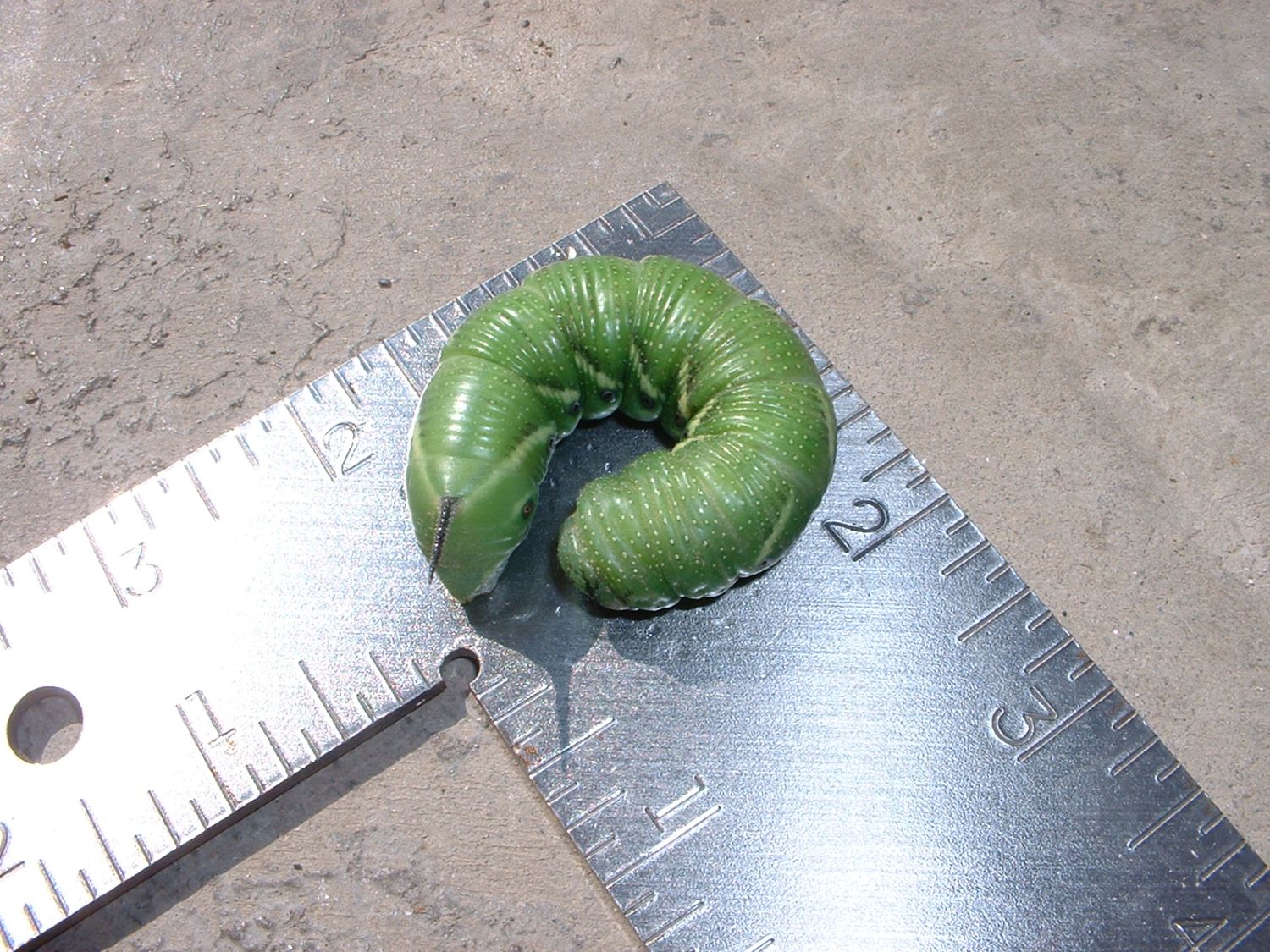
The Tomato Hornworm aka “Green Tomato Worm” Photo Credits: Relic38 Wikimedia Commons CC BY 3.0
Part II: The “Something” That Actually Changed Everything (1830s–1860s)
The real historical turning point that dismantled the tomato taboo was not a single man on a courthouse step, but a perfect storm of medical marketing, global migration, and industrial warfare.
1. The 1830s Medical “Tomato Pill” Craze
In the 1830s, the United States was gripped by fear of cholera and gastrointestinal diseases. The absolute catalyst for the tomato’s redemption came from the American medical establishment in 1834, when Dr. John Cook Bennett declared tomatoes a miraculous cure-all for diarrhea, liver disease, and bilious attacks. His lectures were syndicated in over 200 newspapers nationwide. Entrepreneurs quickly capitalised on the health craze, extracting tomato compounds and selling “Tomato Pills” as patent medicine. Overnight, the public worldview flipped: the tomato was no longer a toxin, but medicine.
2. Cultural Fusion
While rural English-descended settlements clung tightly to historical fears, American urban centers were rapidly diversifying. French refugees from the Haitian Revolution, Spanish traders in Florida, and Italian immigrants in northeastern cities brought rich, multi-generational culinary traditions centered around the tomato. As Anglo-Americans observed their immigrant neighbors thriving while eating delicious tomato dishes, remaining cultural barriers dissolved.
3. The Civil War and the Triumph of the Can
The final nail in the coffin of the tomato taboo arrived with the American Civil War (1861–1865). Armies required lightweight, non-perishable rations, and the newly invented commercial canning process proved that tomatoes were the ideal crop for long-term preservation. Millions of soldiers on both sides were fed canned tomatoes in the field. Returning home after the war, veterans brought a permanent craving for the fruit back to their family farms, firmly transforming the tomato into a mainstream agricultural necessity.
Part III: The Bureaucratic Evolution and Legal Battlefield (1880–1937)
As the tomato transitioned from a seasonal, backyard novelty into a heavily industrialized global commodity, it was stripped of its botanical identity and redefined by the practical logic of law, trade, and logistics.
1. The American Precedent: Nix v. Hedden (1883–1893)
The industrialization of the tomato took a sharp turn in the shipping ports of New York. President Chester A. Arthur signed the Tariff Act of 1883, a protectionist law designed to tax imported vegetables to protect American farmers, while allowing fruits to enter duty-free.
In 1886, prominent fruit merchants John Nix and his family imported a large shipment of West Indies tomatoes. Edward L. Hedden, the Collector of the Port of New York, seized the cargo and demanded a 10% vegetable tariff. Nix paid under protest and sued, arguing that under any scientific definition, the tomato was a fruit and therefore exempt.
The case dragged on for seven years, finally reaching the U.S. Supreme Court in 1893. Justice Horace Gray, delivering the unanimous opinion of the Court, rejected scientific purism in favor of common, everyday language:
"Botanically speaking, tomatoes are the fruit of a vine, just as are cucumbers, squashes, beans, and peas. But in the common language of the people... all these are vegetables which are grown in kitchen gardens, and which, whether eaten cooked or raw, are... usually served at dinner in, with or after the soup, fish or meats which constitute the principal part of the repast, and not, like fruits generally, as dessert."
With that stroke of a pen, the tomato became legally a vegetable in the United States, prioritizing fiscal and culinary utility over biological origin.
2. The Logistics Boom and the “Green-Wrap” Era (1890s–1920s)
Following the 1893 ruling, domestic demand surged year-round, forcing logistics networks to figure out how to ship this highly delicate, easily bruised crop across vast distances. Two innovations emerged:
- The Refrigerator Car (“Reefer”): The widespread adoption of ice-cooled, ventilated railroad cars allowed produce grown in the winter fields of Florida and California to travel thousands of miles to northern cities without rotting.
- The “Green-Wrap” System: Because a ripe tomato would turn to mush during a cross-country rail transit, growers began harvesting them while still completely green, hard, and immature. Workers wrapped each green tomato in tissue paper, packing them tightly into wooden crates. By the time they reached northern distribution centers, they had partially ripened through natural age or early artificial methods, laying the groundwork for a rugged, national market.
3. International Standardization: The League of Nations (1920s–1937)
By the late 1920s, local shipping networks had expanded into a complex web of international commerce, creating an administrative nightmare of “Customs Chaos”. Every nation operated on its own archaic tariff schedules, calculating trade balances by biological names, culinary terms, or vague catch-all phrases.
To resolve this, the League of Nations appointed the Sub-Committee of Experts for the Unification of Customs Tariff Nomenclature. Their task was to draft a single, universal “dictionary of goods” to harmonize international trade. Spending years debating classifications, they finalized the Geneva Nomenclature in 1937.
When the experts reached the tomato, they faced the same dilemma as the U.S. Supreme Court: Science vs. Commerce. Categorizing the tomato as a fruit would disrupt decades of established global trade routes and laws molded by Nix v. Hedden. Choosing administrative uniformity over botany, the League of Nations permanently placed tomatoes under the “Vegetables, edible plants, and roots and tubers” section, codifying American commercial logic onto the global stage.
Conclusion: The Double Identity of the Jersey Tomato
Today, the tomato navigates a permanent double identity:
- In the Garden (Science): It remains a biological fruit, holding seeds and growing from a flower.
- In the Kitchen (Culinary): It is a savory vegetable cooked into main courses.
- In the Law (U.S. Government): It is legally classified under Chapter 07 as an Edible Vegetable for tariff and customs purposes, a standard set by Nix v. Hedden and enforced by the USDA and modern Harmonized System codes.
While states like Ohio and Tennessee ultimately designated the tomato as their official state fruit, New Jersey pushed back, legally establishing it as the State’s Official Vegetable in 2006.
That’s the national story — three centuries of fear, quack medicine, wartime rations, and Supreme Court justices arguing about dinner etiquette, just to answer one absurdly simple question: is a tomato a fruit or a vegetable? New Jersey didn’t just watch that argument play out from the sidelines. By the time Trenton made it official in 2006, this state had already spent nearly two centuries building its entire identity around the answer.
And nowhere is that identity more personal than in Salem County. Long before Congress or the courts weighed in, this county had already crowned its own hero for the cause: a man who, as the story goes, marched up to the steps of the Old Salem Courthouse in 1820 and ate the “poison apple” in front of a terrified crowd, just to prove everyone wrong.
It’s the most famous story in Salem County history — the one that supposedly explains how a 250-year global taboo finally broke, right here, first. In Part 2, we go looking for where that story actually came from, who was telling it, and how much of it is true. The real answer is stranger, and more interesting, than the legend itself.