



Muskrat Season Opens Dec. 1, Continuing a Salem County Marsh Tradition More Than 200 Years Old
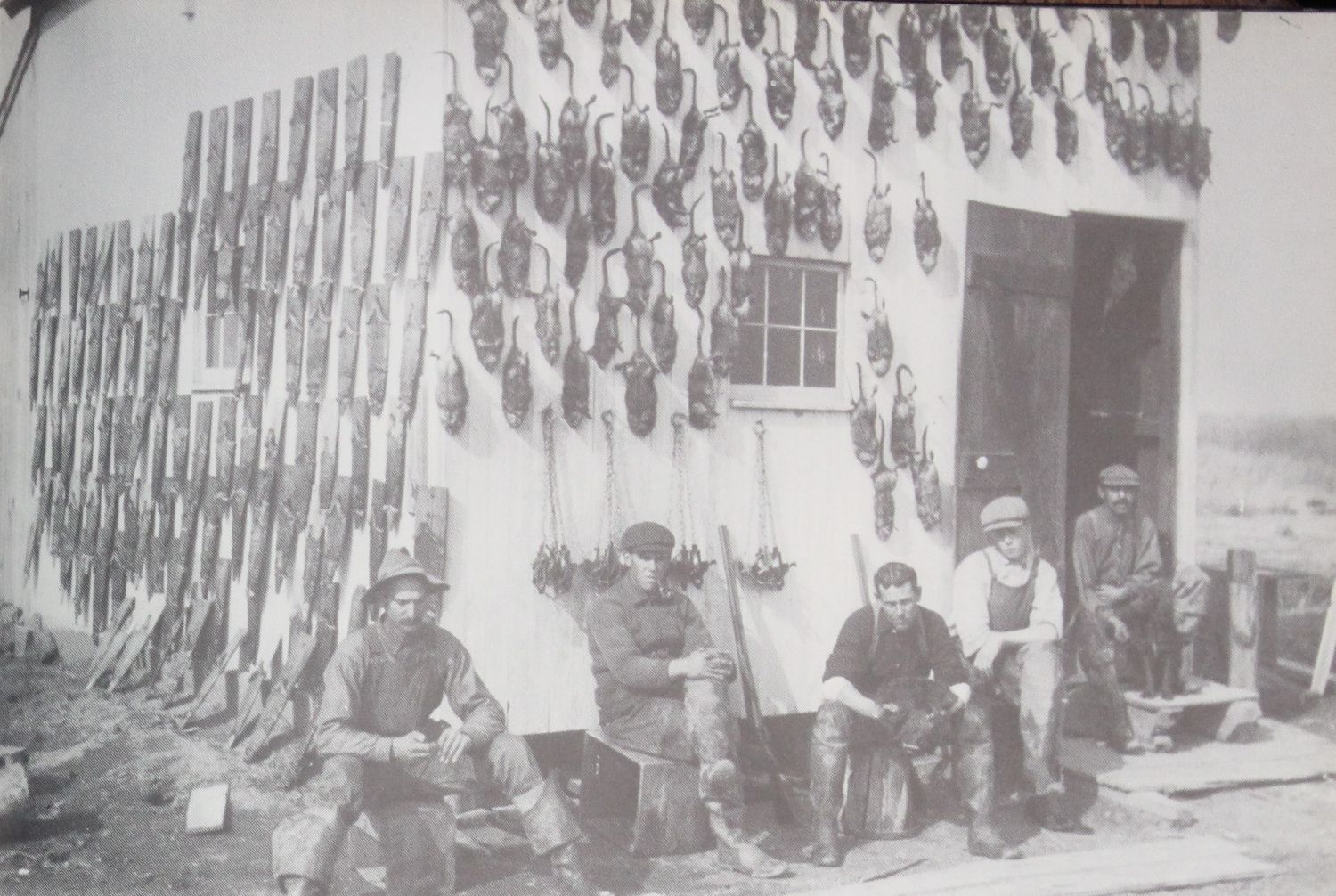
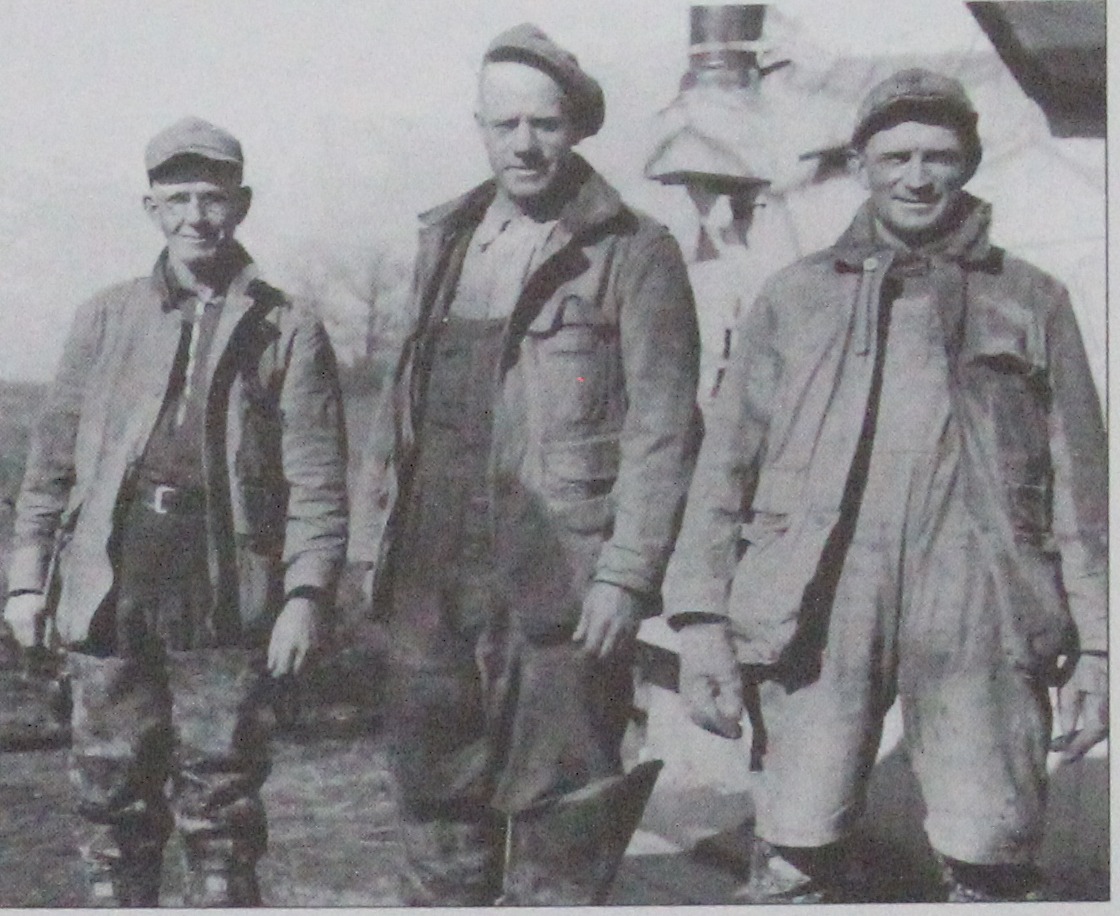
In the old photograph, five men sit on boxes and planks in front of a marsh cabin. Behind them, muskrat pelts hang in rows across the wall, more are stretched on boards along the side, and chains of steel traps dangle by the door. The caption in How Dear to My Heart, the 1976 book of William J. S. Bradway’s photographs of Lower Alloways Creek, says only: “Ike Brandiff and his crew of Ratters.”
At 6 a.m. on Dec. 1, New Jersey’s southern-zone muskrat season opens, and it runs through March 15. Trappers will go back into the tidal marshes of Lower Alloways Creek, along Salem Creek and across the bay side of the county. The work is smaller than it was in Brandiff’s day. The old Salem County books show how big it was, who did it, and how long it has been going on.
The muskrat king of 1826
Newspaper notices from the 1820s, collected in Sketches of Salem, 1823-26, show the muskrat was already a business here. In 1823 a Salem buyer advertised for muskrat, otter, mink and fox skins. In February 1826 Clement Acton put out a call for 20,000 muskrat, otter, mink and rabbit skins, and the paper’s editor dubbed him the “muskrat king.”
The same pages show who owned the marsh and wanted it protected. William Johnson, Samuel L. James, Ephraim Lloyd, James Johnson, Edmund Hall and John Redstrake warned gunners and trappers off the “Saupony” meadows in Lower Penns Neck.
Iron chokers, spears and steel traps
Before the steel trap, trappers made their own gear. How Dear to My Heart credits John Thompson of Stow Neck, a farmer and blacksmith, with inventing iron chokers for muskrat and mink, first used on the Stow Neck meadows. Thompson’s design stayed standard until the wire snood and the Newport steel trap replaced it. Fond Recollections describes snares, blacksmith-made snoods and five-pointed spears, about 30 inches long, used to spear muskrats inside their houses. The spring steel leghold trap spread in the late 1800s and was still the standard when the book’s author began trapping in the late 1920s.
Hope Halfway and the cabins
Around 1910, according to Fond Recollections, Isaac Brandiff of Cedarville set up a trapping camp at Hope Halfway, the stream between Alloway and Hope creeks, and worked more than 1,000 acres of marsh each season. Bradway photographed his crew there. The book names two of the men who trapped the camp: John M. Pancoast and his brother Henry, of Hancocks Bridge.
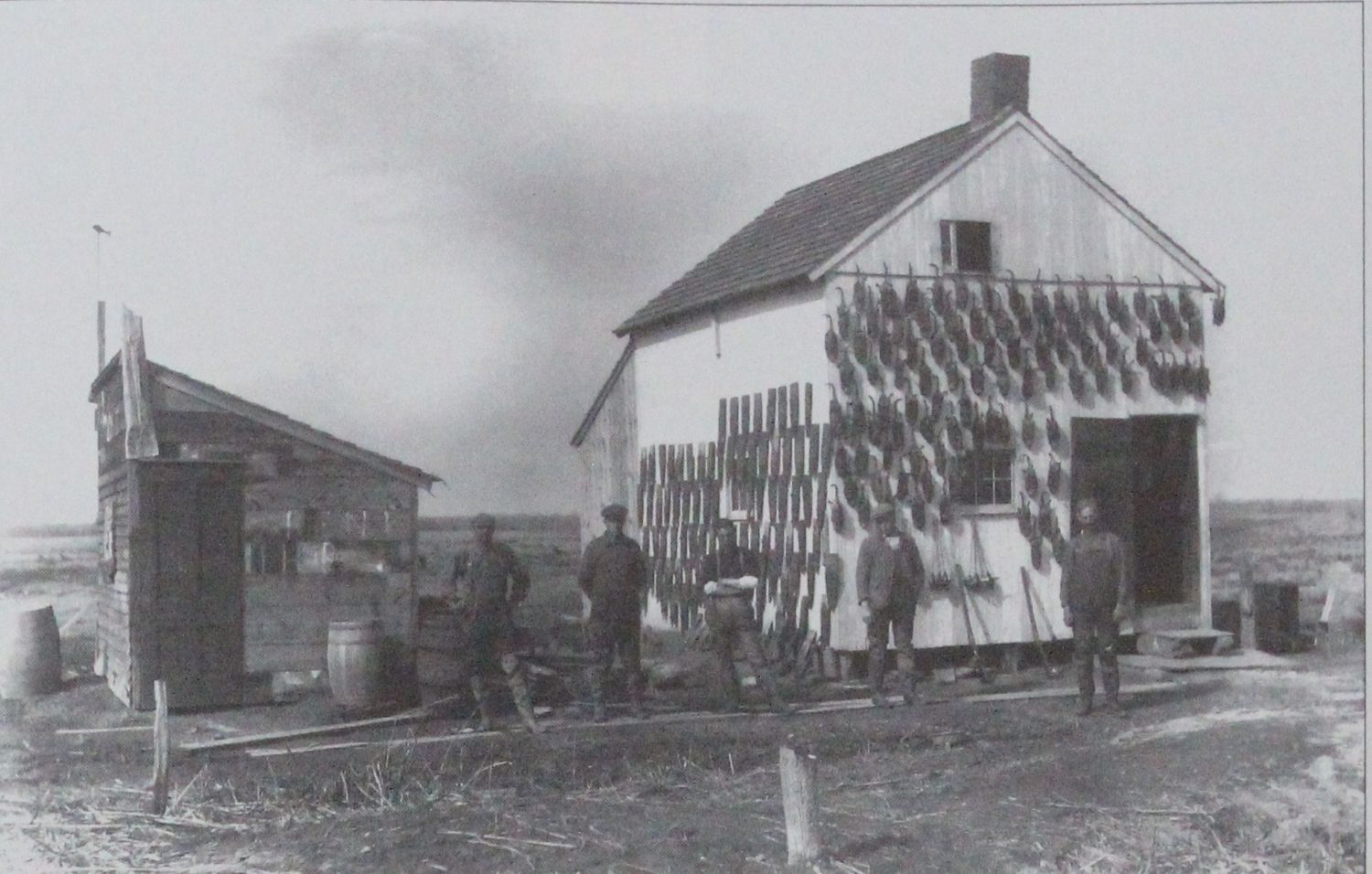
Bradway’s camera also caught the trappers’ other fight. A second photo shows two armed men standing under rows of dead hawks nailed to a shed wall. Hawks went after muskrats caught in traps, and trappers answered with elevated posts fitted with traps, which worked until DDT thinned the hawks out.
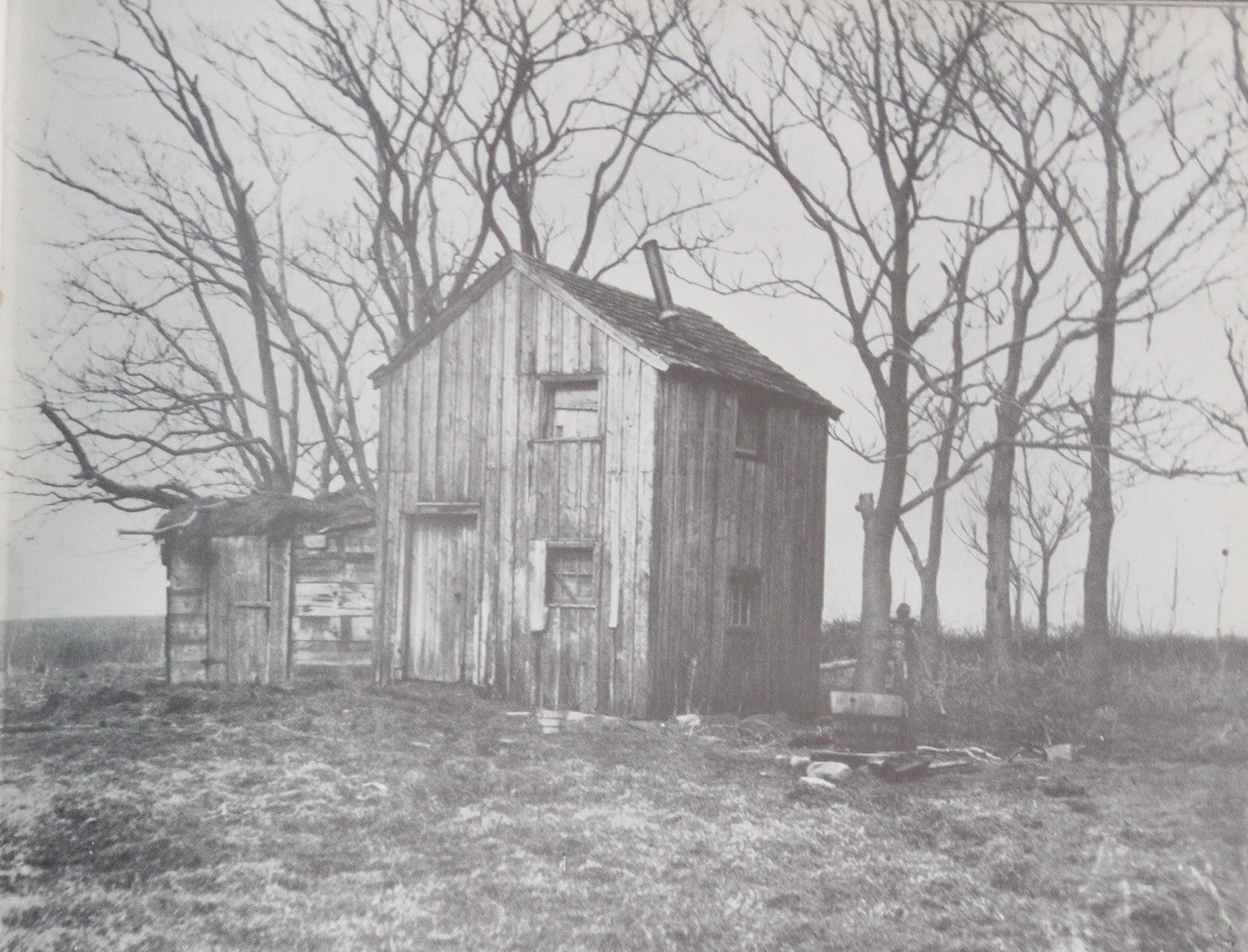
On Round Island, another photo in How Dear to My Heart shows a weathered building “last used by trappers.” The book says it was part of a group of buildings John and Lydia Harris lived in from 1796 to 1805.
John M. Pancoast Sr. is the name that runs through the trapping chapter. Fond Recollections has a 1908 photograph of him with dozens of pelts hung to dry on a shed wall. A 1972 Today’s Sunbeam photo shows him still trapping at 87. Another 1972 photo shows him poling a skiff through the Thorofare Meadow Company marsh, a company of about ten owners that the book says he headed.
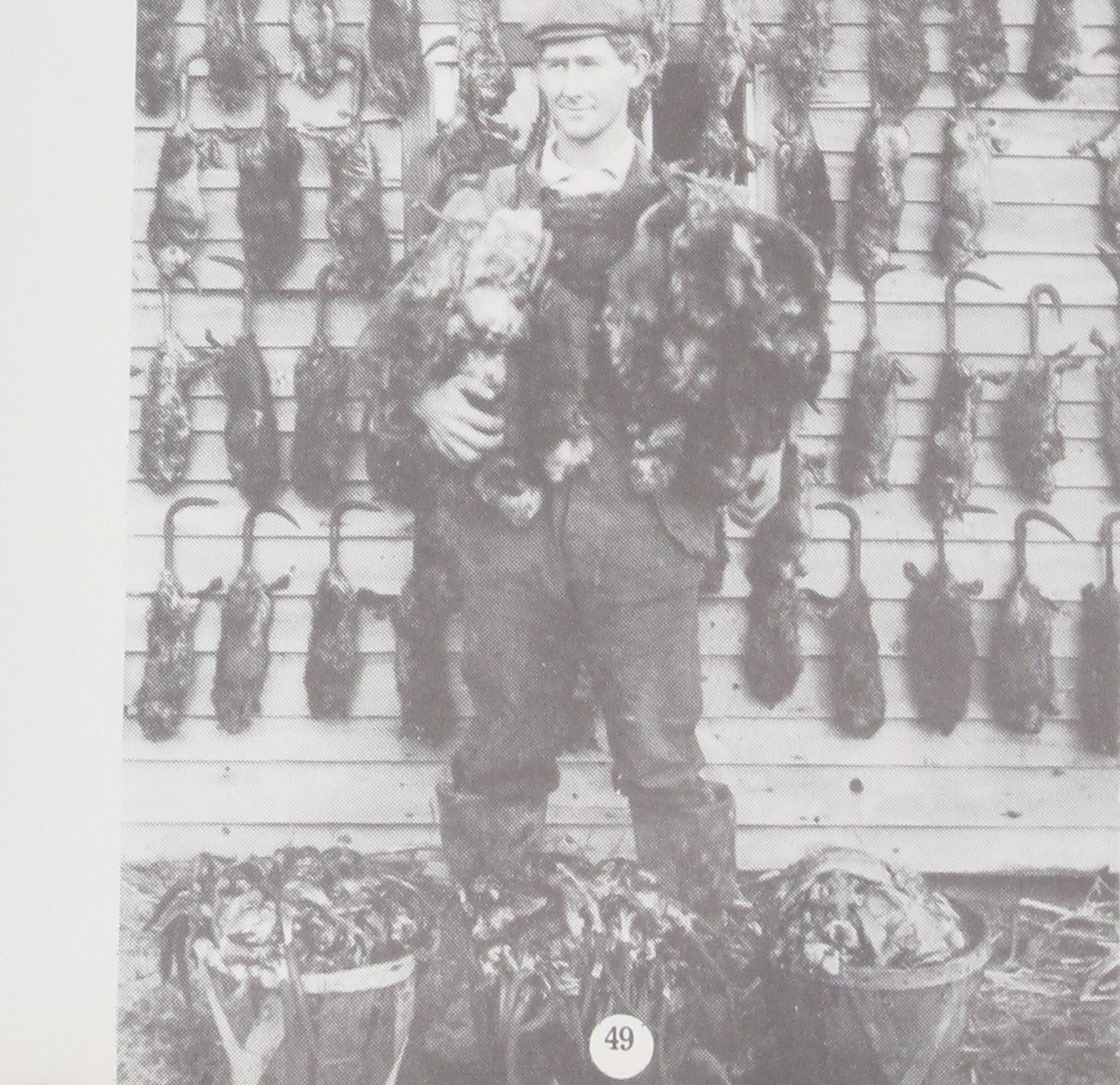
“John M. Pancoast Jr. just loaded with ‘mussies'” (local for muskrats), as captioned in How Dear to My Heart (1976), p. 49.
What a pelt paid
The money moved with the market. A survey of Canton in Fond Recollections says hides once sold for 15 to 20 cents, then ranged from $1.50 to $4 since “the war,” as the survey puts it, with a good black hide fetching $2 one winter. Harry E. Baker and Henry Pancoast, both of Hancocks Bridge, were said to be the first to sell muskrat skins for $4 each during the boom of winter 1919-20. Baker leased Artificial Island for trapping for 20 years, long before it held a nuclear plant.
Catches could be large. Edward “Pluggy” Plummer of Hancocks Bridge took 1,800 muskrats in one season, one of them white. Benjamin Hope Finlaw, who trapped the Stow Creek meadows as a boy for Howard Fogg of Canton, recalled 300 acres and 1,000 to 1,500 muskrats each winter, working out of a cabin at Stretch’s Point. In the 1920s the Stretch’s Point crew included Samuel Grosscup, Frank “Bingo” Sheppard and Richard “Dick” Horner.
Someone had to buy the fur. The book names Jesse W. Elwell of Hancock’s Bridge, Jesse Smith of Bridgeton and John Humphreys of Glenside as the main buyers of the 1920s through the 1940s. Later, Calvin E. Hill ran fur auctions and wore a custom-made muskrat vest. Oliver Ayars could skin two muskrats a minute, and at one point had more than 1,200 pelts hanging in his attic. He once had as many as 10,000 there.
Mud men and meadow banks
The marsh only paid if the banks held. In a 1970 Golden Days column reprinted in Fond Recollections, William B. Vanneman wrote about the “mud men” who kept the Salem and Cumberland meadow banks standing. A mud bank is a favorite muskrat spot, he noted: trap runs in the banks are prime in mid-December through mid-March, and the other nine months the holes the animals gnaw are a problem.
The county’s meadow companies, 71 banks in all by 1964, paid for that work. In 1912 brothers William and Lewis Harris built a dredge in Harmersville and dug miles of water courses through the meadows. In 1963 George Harbeson, whose family’s dredge was nearly a century old, took on a bad breach on Cooper’s Branch in Lower Alloways Creek, with his wife as the fireman.
Storms were the other danger. The Elsinboro Fur Company, owned by Sherman “Cap” Ayars and others, lost its meadow bank in a severe 1930s storm. On Nov. 24, 1950, the author of the trapping chapter and his brother Lewis Fogg were in their uncle Caleb Howard Fogg’s cabin on Cherry Tree Creek for what he describes in Fond Recollections as the worst nor’easter of his life. The book says storm tides swept their father’s car off the road the next day, and he did not survive. Another page names him as Luke Fogg.
A dinner built on the trade
The winter trade fed a winter table. The Lower Alloways Creek Township Fire Company’s muskrat dinner, dated by organizer Tim Burns to 1938, became the company’s biggest fundraiser. Fond Recollections reprints a Today’s Sunbeam story on the 54th dinner by Jonathan Berr. Fire chief Calvin Hill Jr. trapped about 1,300 muskrats for it, boiled 45 minutes and then fried. Alloway Township Mayor Clarence “Butch” Hitchner told Berr he liked muskrat better than lobster or prime rib.
The book also reprints a March 1984 Country Magazine piece, “A Lower Cricker Tradition,” about Marvin Rankin, taught to trap by his father, grandfather and great-grandfather, who ran more than 350 traps with his partner Harry Duffield. Duffield took part of his pay in musk. The township’s seal carries a muskrat, and the rescue boat carried a decal of one on water skis.
In 2008 about 400 people were expected to eat roughly 1,700 muskrats. By the 75th dinner in 2013 the crew prepared about 1,100. The company paused the dinner in early 2018, and it has since ended. Smaller dinners continue, including one at Fraternal Order of Eagles Aerie 1966. Alloway Township Veterans Association has an annual muskrat dinner as well as Tilbury VFW.
Fewer muskrats, fewer trappers
A lot changed under the trappers. During the 1950s and 1960s, Fond Recollections says, most of Lower Alloways Creek’s salt marsh, including three large holdings, was sold to the state and opened to licensed trappers each Jan. 1. Later the invasive reed Phragmites ruined about 1,100 acres of the old Thorofare Meadow Company ground.
New Jersey Division of Fish and Wildlife figures show the statewide harvest peaked at 654,436 in 1975-76. By 2018-19, the latest year in the state’s published table, the estimate was 4,558, a drop of about 99 percent. The causes are debated: the 1984 ban on steel-jaw leghold traps, collapsing fur prices (the 2017-18 survey valued 9,279 muskrats at about $26,500), predators such as eagles and mink, and storm damage to the marsh.
Who is still at it
Cumberland and Salem counties reported the state’s highest muskrat harvests in 2017-18. In Lower Alloways Creek, the name tied to the work is Steve Fisher of Hancocks Bridge, who started trapping at 7. According to a 2013 Inquirer profile, he left a mill job in 2000 to trap and farm full time and shared pelt money with landowners on about 2,500 acres of private marsh. His son Kyle skinned muskrats after school.
There are still families including the Franklin’s in LAC which have long hunted these waters and will continue doing so.
To follow…
This is the first in a series on hunting and trapping in Salem County through its history. Next is deer season, and the deer park Isaac Sharp kept at Sharptown around 1730. If your family has a photo of a trapping cabin, a skinning shed or a muskrat dinner, or you know the names of the men on those boards, The News of Salem County would like to see it.