


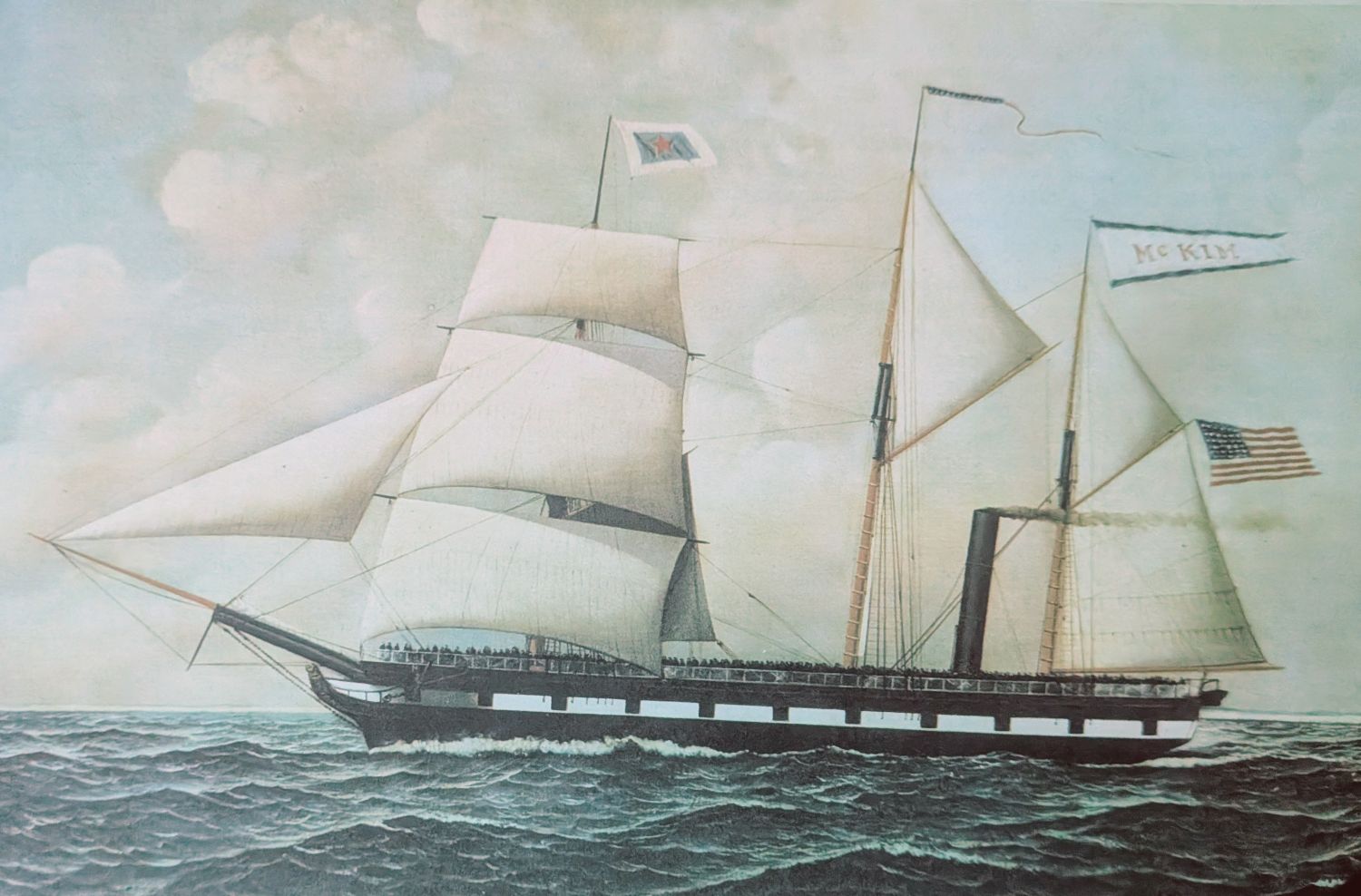

During the night of October 16, 1847, at high water, the Reeve brothers put a steamship into Alloways Creek two hundred yards below Fogg’s Landing. A young man named John Mullica stood and watched it, went home, and wrote it down in his day book between a note about potatoes and a note about mowing weeds.
ALLOWAYSTOWN – Alloway was a shipbuilding town once, and the proof of it is not a photograph or a plaque but a few lines of bad spelling in a private notebook.
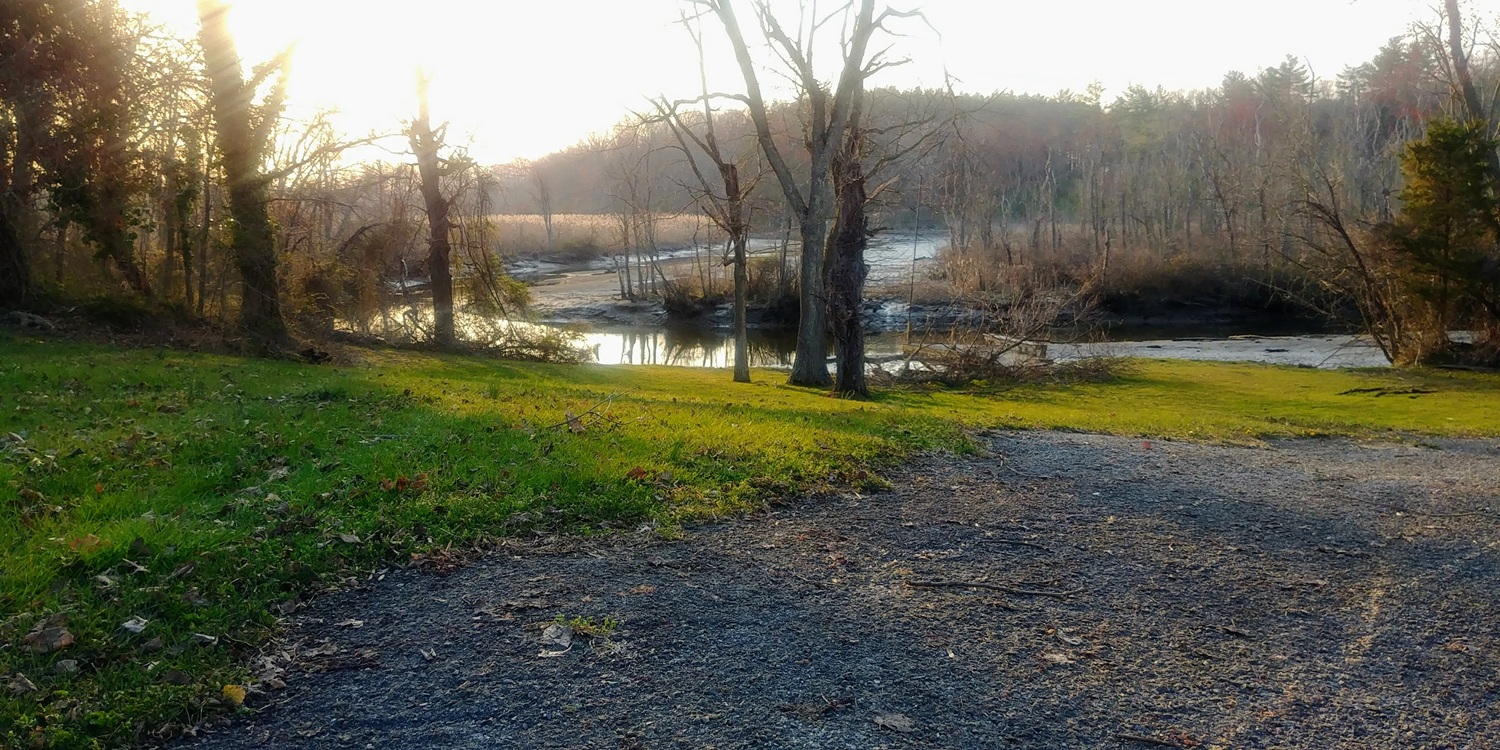
On October 16, 1847, John Mullica recorded that “Messrs. Reeve’s Steam Ship was launched” into Alloways Creek about two hundred yards below Foggs Landing. He was not writing for anyone; he was keeping a day book, the way a working man kept one, and the entries around this one are about corn husking and peach picking and the price of oak bark. But something about that evening got into him, and the sentence he produced is the best piece of writing anyone in this county left us about the industry that made it.
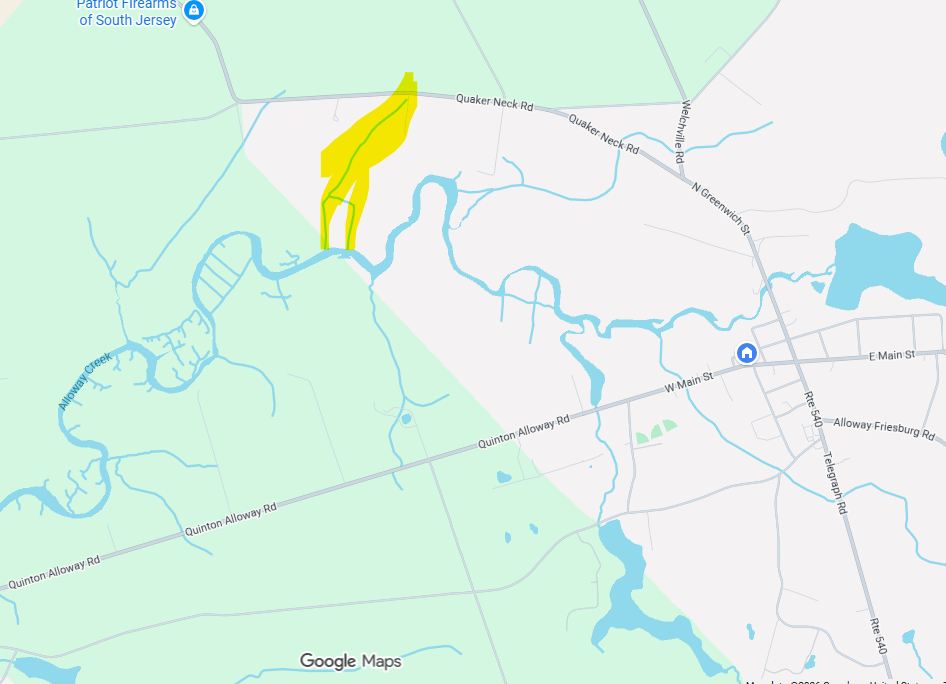
It was, he wrote, one of the sights that the Eye could behold, and the launch was accomplished in the “most magnificentest manner that any piece of” work was ever finished “by man.”
He had been expecting it. The ship was to go in that evening about six o’clock, at high water, because a vessel of that size could only be floated off on a full tide; Alloways Creek is a tidal creek, and the yards worked to the moon rather than the clock. Then it went in, and he watched it go.
The ship nobody can name with certainty
A week later, on October 23, Mullica wrote the sequel. The steamship “was taken” out and started on “her way to the City of Philadelphia to Fit out and rigg,” and he added the detail that makes the whole thing stick: “Her Name is to be Patona Called after a Southern Trotting mare.” She was going South.
That is what the eyewitness says. The book that preserves his entries says something else. A footnote on the Reeve & Brothers ships table identifies the vessel as the Columbus, a large steamship built at Reeve’s Landing in 1847, “commanded by one captain Peck and was built for the California trade.” The footnote is careful with itself; it says the Columbus launching “is probably the event which prompted the eloquent recording in the day book of John Mullica of Alloway on October 16, 1847.”
Probably. The two accounts do not fit together, and this paper is not going to pretend they do. A ship bound south under the name of a trotting mare is not obviously a ship bound for the California trade under the name Columbus. Either the footnote’s guess is wrong, or the vessel was sold and renamed between her launch and her first voyage, which happened often enough, or the Reeves put two large steamers in the water that year and the diary and the table are describing different hulls. Somebody with access to the Philadelphia shipping registers for 1847 and 1848 could settle it in an afternoon, and we would very much like to hear from them.
The yard
Reeve & Brothers built ships at Alloway from 1821 until 1859, and for most of that time they were the reason the town existed in the shape it did.
The village had been called Thompson’s Bridge. The Reeves laid ten acres into forty-two building lots, those “were readily” taken up, and the place grew quickly to about the size it would hold for the next century. The engraving reproduced in Alloway Remembers shows the result: a stone bridge of three arches over the creek, the main street climbing away from it between gable-fronted houses, and at the right, close to the water, the long low range of the Reeve mills.
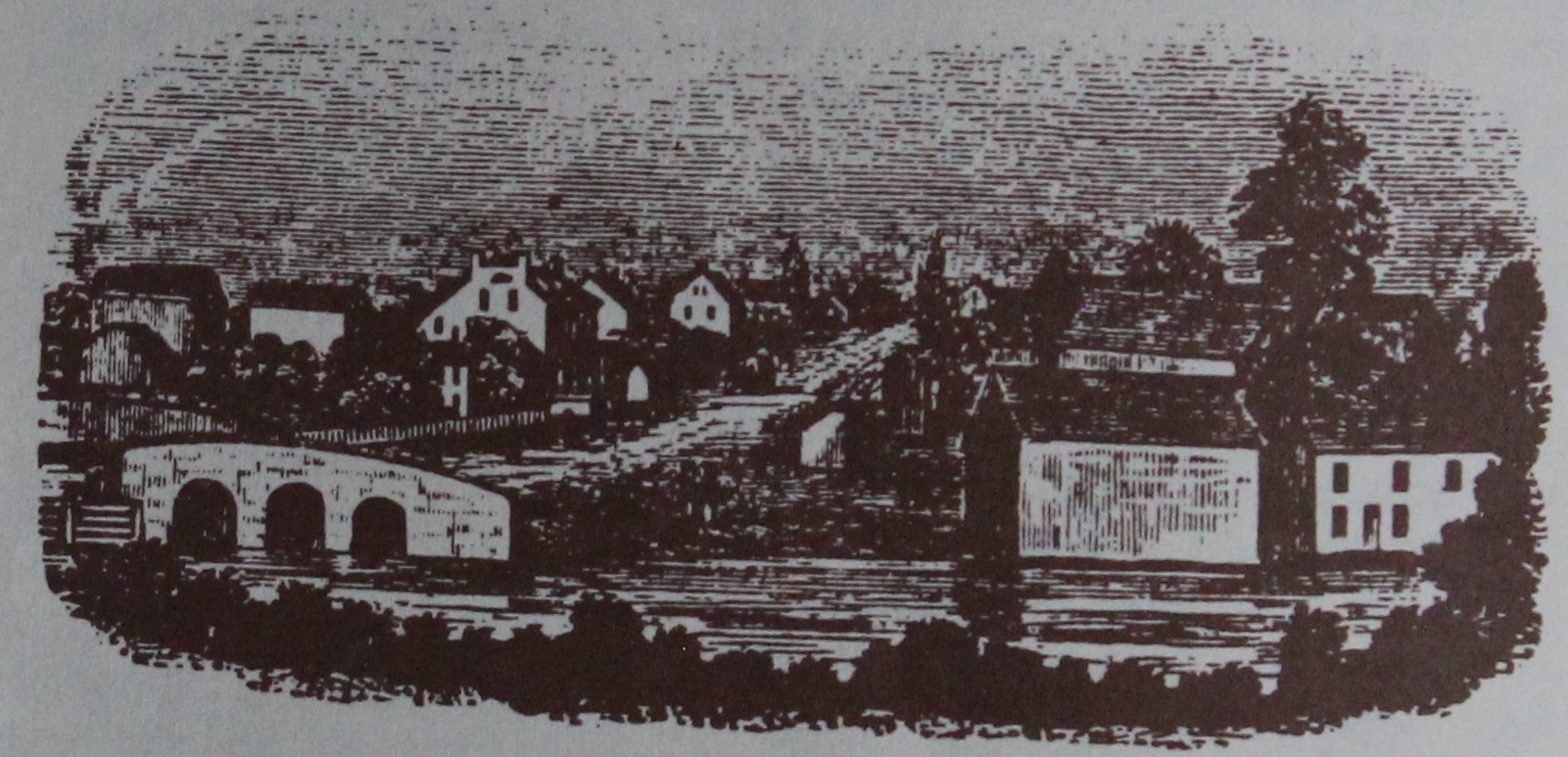
The caption under that engraving is worth quoting whole, because it is a stranger writing down what Alloway looked like to an outsider in the middle of the nineteenth century. “This thriving village is at the head of navigation, on Alloways creek, 6 m. E. of Salem. It contains a Baptist and a Methodist church, several stores, and about 800 inhabitants. Ship-building is carried on here to a considerable extent; besides many small vessels, one or two large ships of 600 tons burden have been constructed. The white-oak of this region is said to be nearly equal, for ship timber, to the famous live-oak of Florida.”
That last line is the whole economic argument for the yard. Salem County white oak was good enough to compete with Florida live oak, and ships built of it “found a ready sale on account of the well known superiority of Salem County white oak.”
The list of what they built reads like a shipping column. The schooner Pearl, 1841, built for themselves and commanded by Captain Job Denn of Hancock’s Bridge. The steamship John S. McKim, launched June 15, 1844, under Captain Enoch Moore. The ship Wataga, begun in 1843 a little over a mile below town on the north side of the creek at what had been Sheppard’s Landing and has been Reeve’s Landing ever since; her frame and deck frame went up, then a steamship contract came in, so the Reeves “let the ship stand” and built the McKim first, and only after the McKim went into the water did they come back and finish the Wataga for Captain Moore and the East India trade. There were side-wheel steamers, among them the Oscela, which ran up the river above Philadelphia, and a steady run of canal boats for the Schuylkill Navigation Company, and through it all they were “always keeping a brig or schooner on the stocks.”
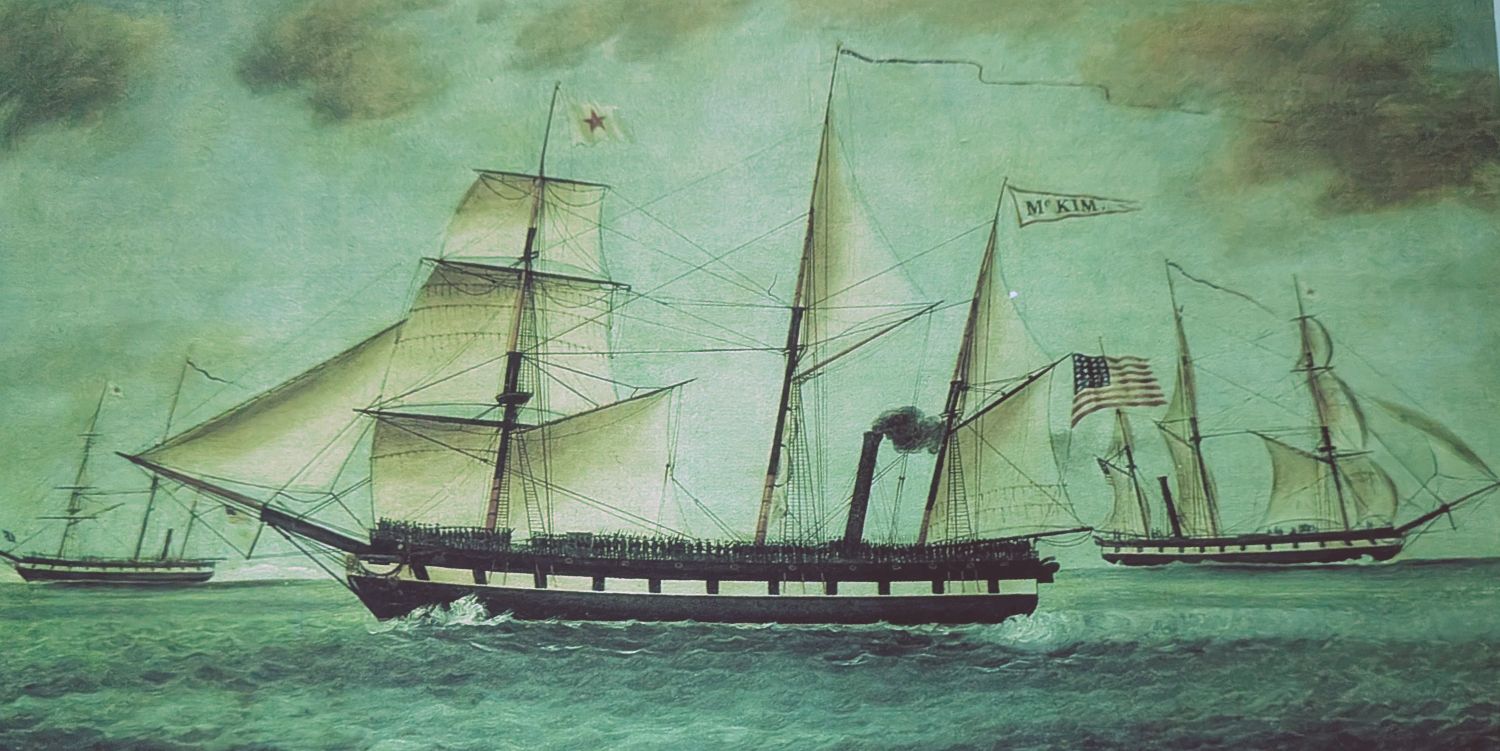
After 1848 the yard built so many vessels on speculation that it lost track of its own work. The boats were bought by parties in Philadelphia and elsewhere and were not named until after the sale, so “the names of but few of them were ever known to the builders.” Three that were: the brig Samuel Churchman and the schooners Mary Parker and James M. Vance.
How it ended
It ended quietly, and the sentence that records it is as plain as the one about the launch was ornate. “In 1859 while they had a schooner on the stocks unfinished, owing to the age of the senior partner and ship timber becoming scarce, they quit business.”
The timber had run out and the senior partner had got old, and that was that. The schooner on the stocks was never finished. What happened to the town afterward is in the same source, in a line that ought to be read slowly by anyone who writes about Salem County now: when the Reeve brothers retired in 1859, “the town came to a stand-still, from” which, as of the end of the nineteenth century, “it has not yet recovered.”
Alloway lost its industry in 1859 and a man writing forty years later still thought of the place as a town waiting to start again.
The man with the notebook
John Mullica lived in Alloway in the middle of the nineteenth century and his day book covers 1847 in a close, odd, continuous way. The Reeve launch is in there, but so is everything else, and the everything else is why the launch entry works.
In 1847 he heard a whip-poor-will “speak his name very distinctly.” He followed the Mexican War and set down his own casualty figures. He went gunning with James Hopkins in August and got five squirrels and some birds. He picked peaches for William Patterson, a hundred and fifty baskets one day and a hundred and seventy-five another. He measured a sunflower of his own raising at four feet six inches around. He helped form the Allowaystown Union Beneficial Society, which charged twenty-five cents a month. He recorded a gunning accident that killed George Dopson, who climbed a fence and took his own charge in the breast, lingered a fortnight and was buried in the Old Grounds. He noted that the frogs were singing by the second of December as if spring were coming.
The October 23 entry about the Patona sits in that book between a note about sixteen bushels of potatoes taken as pay in goods and a note about a field of weeds he had mowed for Mr. Patterson. That is not a failure of proportion on Mullica’s part. That is what a steamship launch was in Alloway in 1847: a thing that happened in the course of the week’s work, on the creek at the bottom of the street, and you went and looked at it and then you went back to the potatoes.
His diary was privately owned by the Herbert Whitakers of Quinton when the entries were transcribed, and the transcription keeps his spelling and his punctuation, which is the right decision and the reason “magnificentest” survived.