


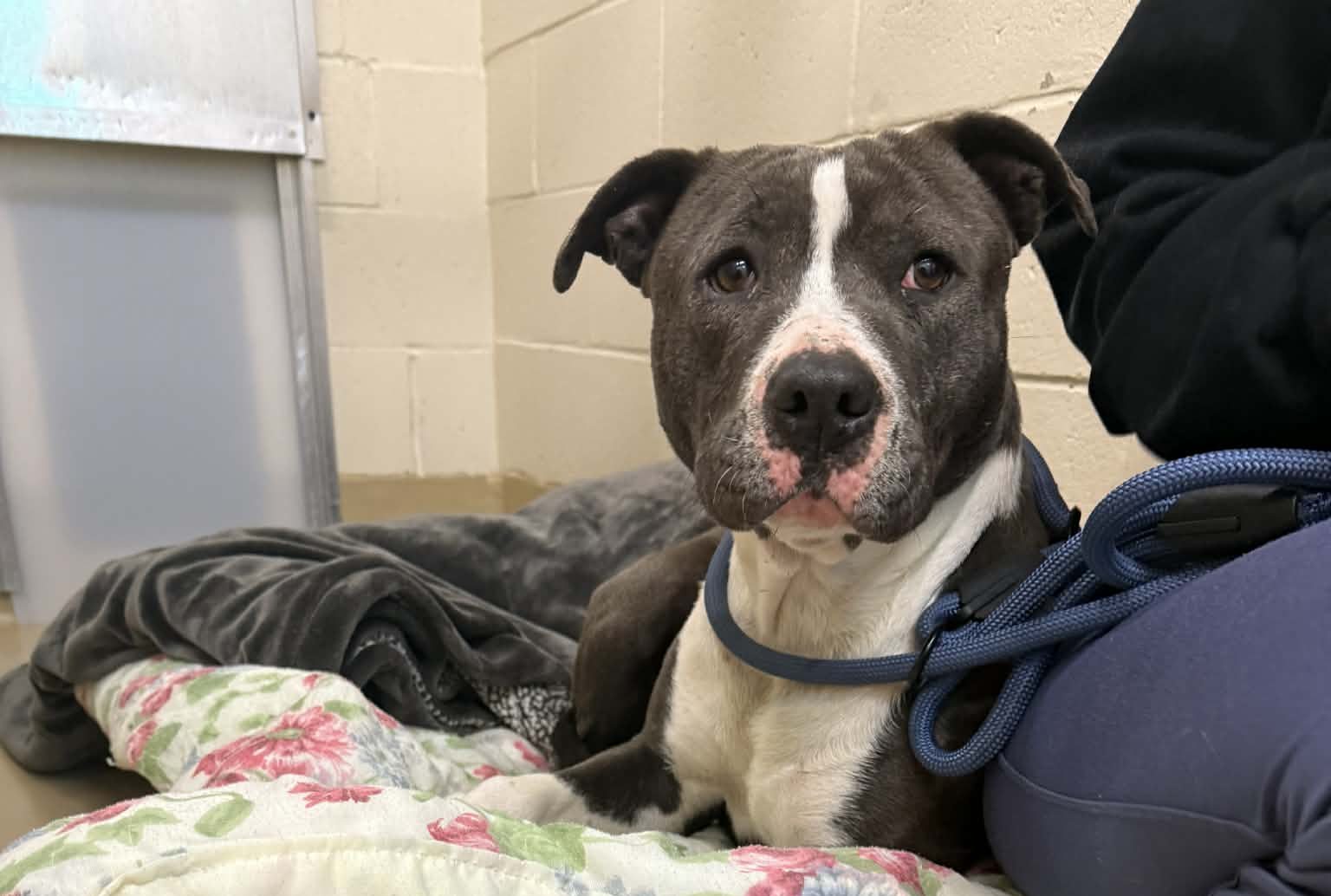
With no centralized county shelter, the grueling work of catching and rehabilitating dumped dogs falls on one relentless volunteer.
SALEM COUNTY – In the dead of winter, while most of Salem County is asleep in heated homes, Cindi Strong, (30-year-old Woodstown resident raised in Pennsville) is awake, staring at a map, and waiting for a trap to spring.
During a recent bitter stretch, Strong found herself driving through two back-to-back snowstorms running on just one to three hours of sleep a day. She wasn’t plowing roads or repairing power lines; she was tracking a terrified, abandoned Pitbull named “Roadrunner” across county lines.
“I have a bleeding heart for dogs,” Strong explains, brushing off the brutal conditions that would deter most people. “They remind me of babies. They are innocent and rely on us. The weather doesn’t stop me… I’m relentless until I safely capture the dog.”
For Strong, this relentless pursuit isn’t a paid county gig—it is a massive, solo volunteer operation that has exploded in scope. As a child, she used to ride around looking for loose dogs to return to their owners. When she began officially trapping dogs four years ago, she handled maybe five missing or dumped animals in her first year.
But a quiet, rural crisis has escalated drastically. In the past two years alone, Strong has rescued over 100 dogs. What used to be a call once a month has turned into multiple calls a day, transforming her into the unofficial, unpaid safety net for Salem County’s discarded pets.

The Science of Survival: Entering the “Dumping Ground”
To understand why a single volunteer is logging sleepless nights in freezing temperatures, you have to understand the psychology of a dumped dog. When an animal is discarded on a rural backroad, they don’t just wait around to be saved.
“A dumped dog or a lost dog enters survival mode, and they only care about staying alive and safe,” Strong explains. “If not approached correctly, even by their own owner, they will run. Instincts take over, and normal behavior changes.”
Because a terrified dog views itself as potential prey, they become almost entirely nocturnal, bedding down safely during the day and searching for food under the cover of darkness. This is where Strong’s professional background gives her a crucial edge: Cindi is a dog trainer. She doesn’t just chase dogs; she outsmarts them.
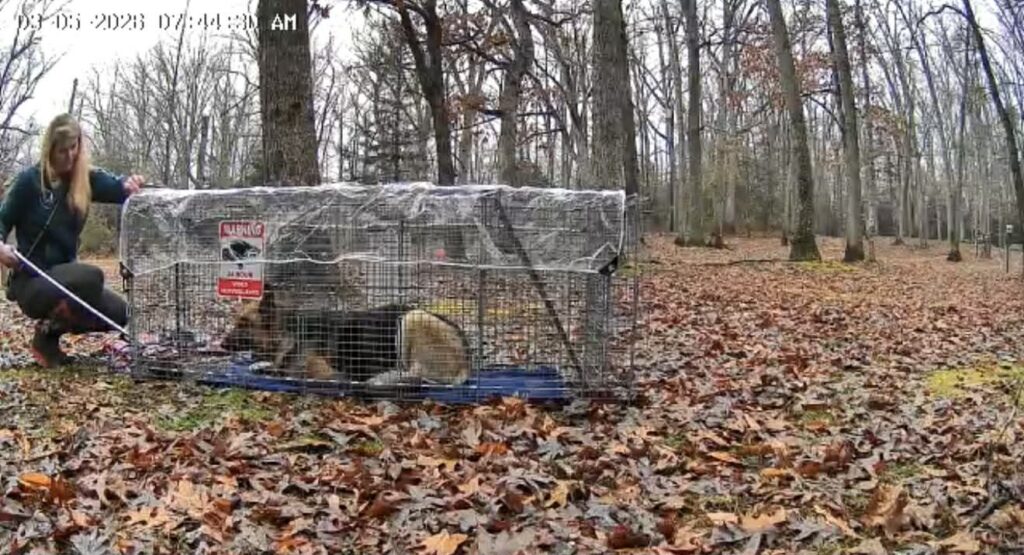
Strong approaches a rescue like a detective working a case. She maps out every single confirmed sighting, looking for behavioral patterns. She notes how the dogs follow power lines, stick to the woods, and navigate toward water sources. Once she establishes a pattern, she sets up feeding stations equipped with live-feed cameras to anchor the dog to a specific area. Only after a dog is consistently eating from the station does she finally deploy the trap.
“Trapping has actually made my training even more successful because I’m constantly studying dog’s behavior, trying to figure out where they are hiding and their next move,” she says.
But even with her expertise, the process is incredibly fragile.
The Tragic Wait: When the System Fails
A carefully laid trapping plan can be shattered in an instant by well-meaning, but adverse, public interference.
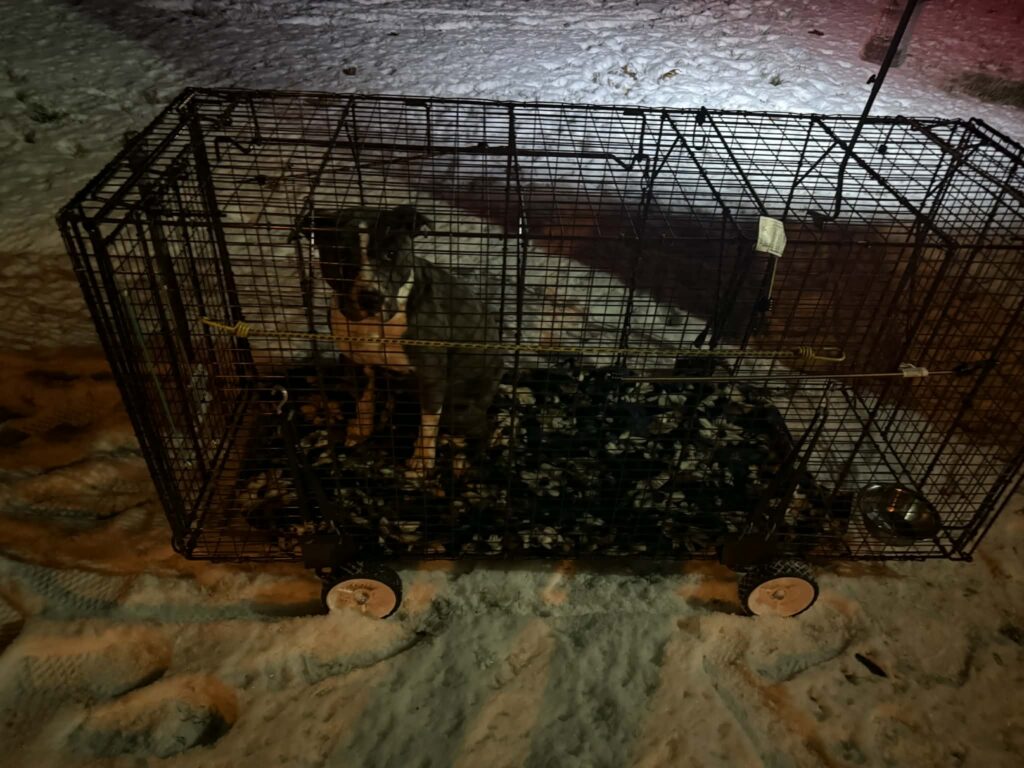
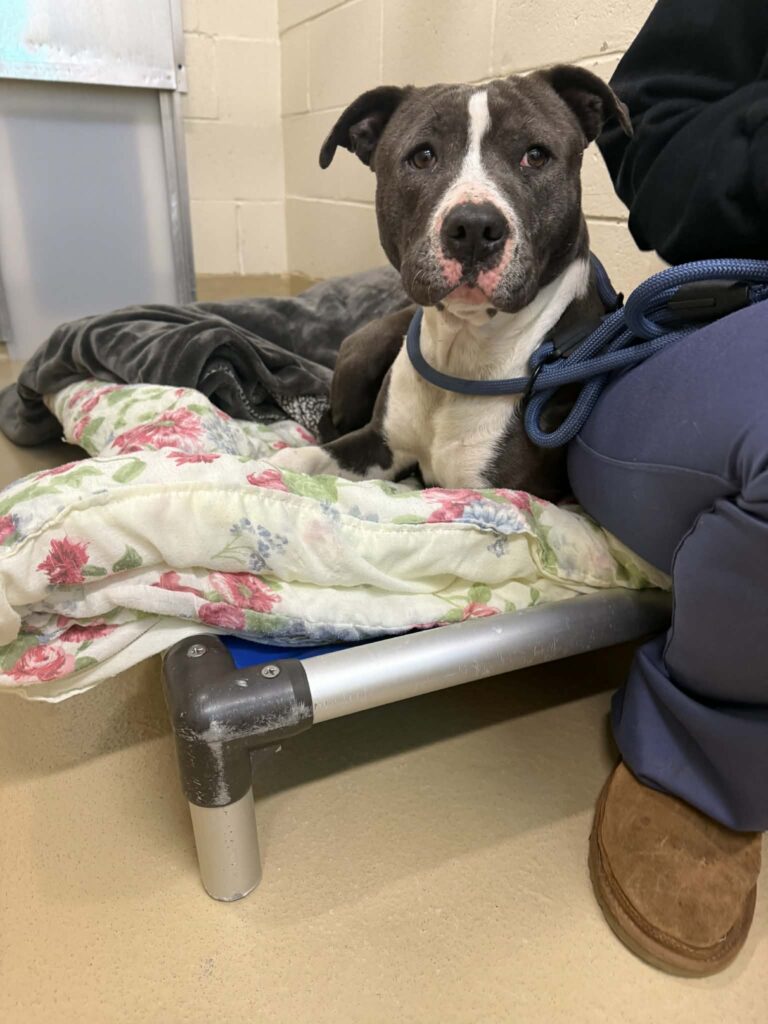
Take the case of “Roadrunner,” the Pitbull dumped in Pittsgrove. She was on the run for 16 harrowing days. Instead of letting Strong work her methodical trapping process, people began chasing the terrified animal—some doing it out of frustration that Strong wasn’t capturing the dog fast enough.
“Roadrunner traveled 10 miles within 12 hours,” Cindi recalls of the chaotic chase. She was forced to deploy multiple traps across vast distances, driving through snowstorms to refresh the bait. All of this being done while running on only a few hours of sleep. She eventually secured Roadrunner when the exhausted dog finally settled in an isolated field in neighboring Gloucester County.
Strong shouldn’t have been the only line of defense for a dog crossing county lines. However, the safety net in South Jersey is currently stretched past its breaking point. Strong covers all 15 municipalities in Salem County alone.
“Animal control isn’t required to trap,” Strong explains, pointing to the massive loophole in the municipal system. If a dog runs away before or as animal control arrives, the official response often ends there. The burden falls squarely back on volunteers.
But catching the stray dogs is only half the battle; the glaring issue is where to put them.
Yet, without a centralized county shelter, Strong often has nowhere to take them. Currently renting a small home while her house is being built, she physically cannot foster the dogs herself. In the past, she would sit in her car with a trapped dog for hours on end, desperately calling around for placement—a practice she had to stop because the stress became unbearable.
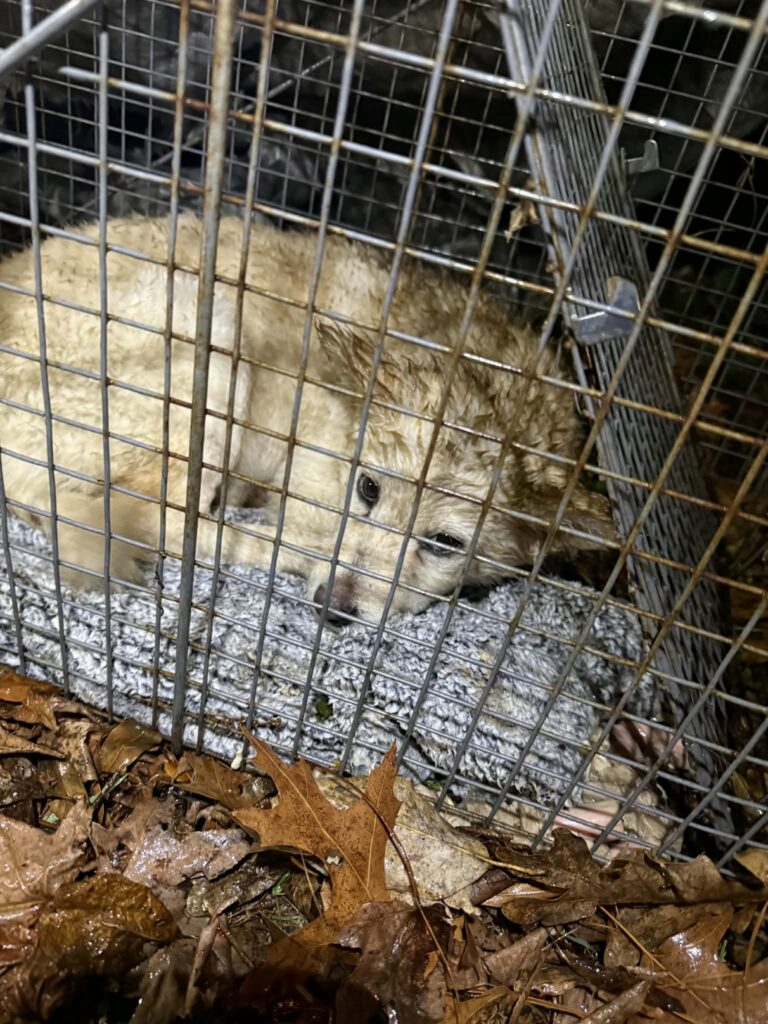
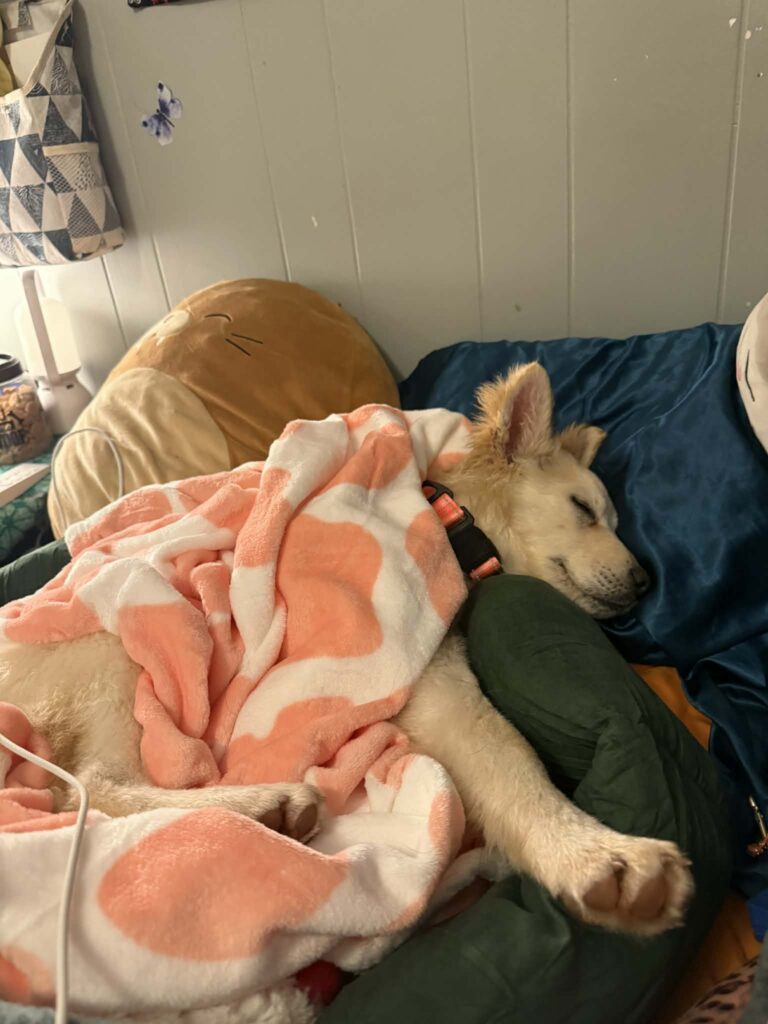
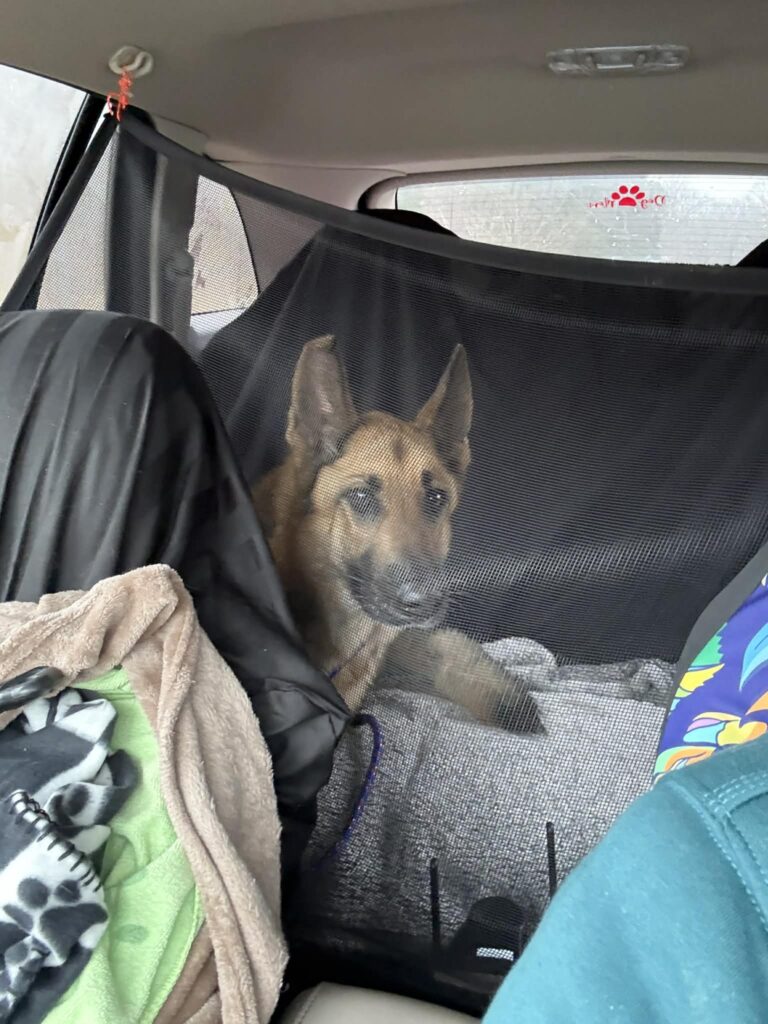
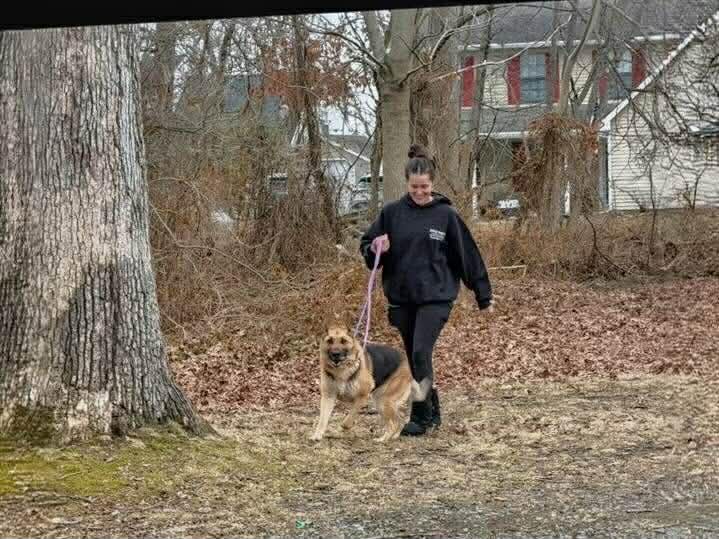
This bureaucratic void has fatal consequences. Strong points to “Winter,” a German Shepherd she recently tracked in Quinton.
“Winter had to suffer for a week longer because there was no shelter contract, and rescues don’t take stray dogs,” Strong laments. “I was posting every day asking for someone to hold her so I could trap her to safety.” Unless Strong can independently secure a placement, these dogs have to stay out on the run, risking starvation, freezing temperatures, or getting hit by a car.
Follow the Money: Salem County’s Stopgap Measures
By New Jersey state law, every county is required to have a functioning animal shelter. While Salem County has a nonprofit humane society and a municipal pound in Pennsville, the wider county has operated without a centralized, county-run facility to absorb the influx of abandoned animals from its rural townships.
Recognizing the crisis, local politicians have finally begun moving taxpayer money to address what they legally declared a “public exigency.”
The initial groundwork was laid in the fall of 2025 with Bond Ordinance 2025-005. This authorized up to $1.9 million for the acquisition and improvement of a property for a municipal animal shelter. However, buildings take time to secure and retrofit. Meanwhile they were scrambling for temporary fixes this winter while dogs like Winter and Roadrunner froze.
To bridge the gap, the Salem County Board of County Commissioners authorized tens of thousands of dollars in emergency contracts. In January 2026, they allocated an estimated $10,000 to send dogs to the Monmouth County SPCA through Resolution No. 1016-051. On 3/4/2026, another resolution (Resolution No. 2026-111) was passed dedicating an estimated $20,000 to the Pennsville Township Animal Shelter for temporary services.
The biggest announcement came at that same March 4th meeting. Resolution No. 2026-120 authorized the purchase of the property at 1059 Route 40 in Carneys Point Township for $450,000 “for use for county purposes specifically for utilization as a municipal animal shelter…and will be funded through Bond Ordinance 2025-005 enacted around 8/20/2025.”
Bridging the Gap Between Policy and Reality
This new property represents a massive beacon of hope for animal welfare in South Jersey. Once renovated and staffed, it will fundamentally change the landscape for abandoned pets and the volunteers trying to save them.
“People will have a place to take dogs to surrender them instead of dumping them,” Strong says, visualizing the relief the Carneys Point Township facility will bring. “Regular citizens who have a heart and pick loose dogs up will be able to take them to the shelter. Stray dogs won’t have to stay out, running scared longer than need be.”
But until the doors of that building officially open, the interim reality remains grim. The gap between a purchased building and a fully operational shelter is measured in months. For dogs dumped on the backroads of Pilesgrove Township or Quinton, survival is measured in hours.
Going from fielding one call a month to multiple calls a day has left Strong physically and emotionally drained. Yet, when asked how she keeps from burning out in the face of such a sheer volume of discarded animals, her answer is as relentless as her trapping methods.
“I’m exhausted,” she admits candidly. “But I focus on the difference I’m making. How many lives I’ve saved, and continue to.”
If you’d like to provide any assistance or help with Cindi’s efforts, here is a link to her Amazon Wish List: https://www.amazon.com/hz/wishlist/ls/3SFU91FT79BXS…
You can also email her at cindisanimalservices@gmail.com and she will let you know what type of resources she currently needs.