


Tadmore in the Wilderness: How Alloway Got Its Biblical Nickname, and the Other Salem County Places That Went by Other Names
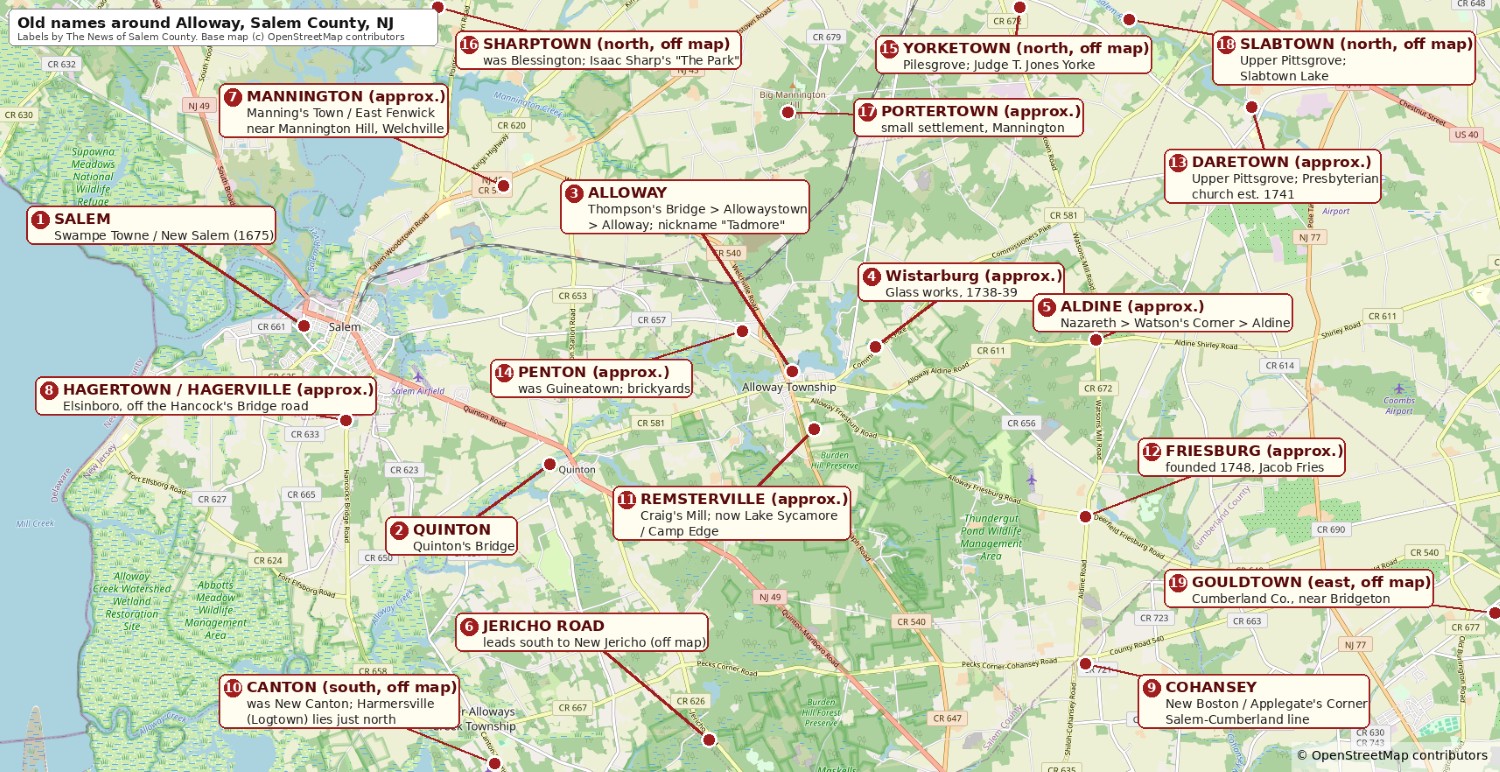
Before Alloway was Alloway, it was Thompson’s Bridge. Then it was Allowaystown. And for a stretch in the 1800s, to anyone who read the local papers, it was Tadmore.
That last name came out of a political feud, a free dinner, and a newspaper writer with a sharp pen and a Bible within reach.
The free dinner
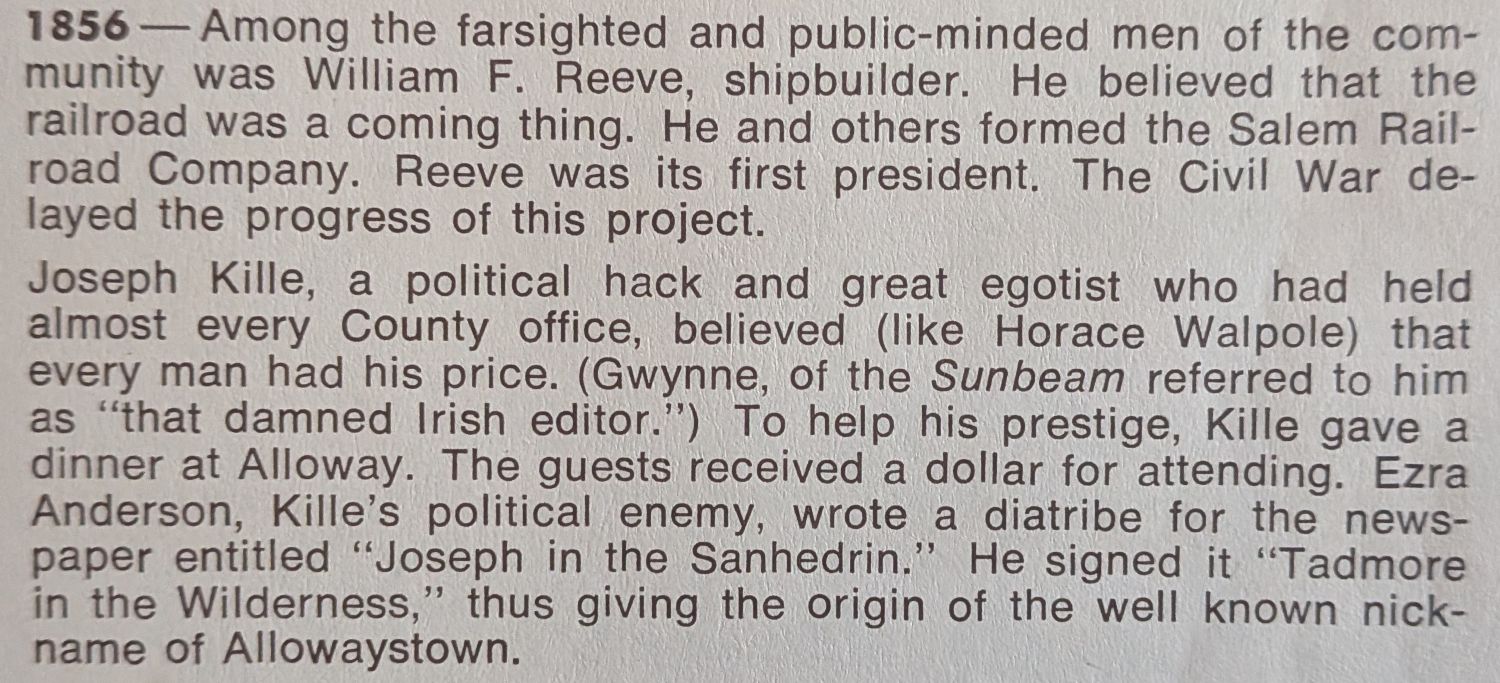
The story is told in the timeline in Alloway Remembers, under the year 1856. Joseph Kille was, in the book’s words, “a political hack and great egotist who had held almost every County office.” To raise his standing, Kille gave a dinner at Alloway. Guests who showed up got a dollar for attending.
Ezra Anderson, Kille’s political enemy, was not impressed. He wrote an attack for the newspaper under the title “Joseph in the Sanhedrin” and signed it “Tadmore in the Wilderness.”
The book says that is how “the well known nickname of Allowaystown” began.
A 1964 Salem County Historical Society booklet, Place Names of Salem County, tells it a little differently. It says that when Salem newspapers ran a series called “How It Got That Name,” a woman in Hutchinson, Minnesota, Mrs. Hannah Anderson Higgins, wrote in that her father gave Alloway the nickname. She described him as a local gentleman “given to much writing” who began his newspaper letters with “Tadmore in the wilderness.”
Same family name, same flourish. The two accounts probably describe the same man.
Why “Tadmore”?
Tadmor is a real place, and a famous one. The Bible mentions it twice: in 1 Kings 9:18 and 2 Chronicles 8:4, where King Solomon is said to have built “Tadmor in the wilderness.” The name is usually read as “place of palms,” and the city, an oasis in the Syrian desert, was later known by its Greek name, Palmyra.
The Bible spells it “Tadmor.” The Alloway nickname, in both Alloway Remembers and the 1964 booklet, carries an extra “e”: “Tadmore.” We don’t know why.
Why Anderson picked it, we don’t know. The book doesn’t say. A city built in the wilderness could suggest something grand, or it could suggest a remote outpost in the middle of nowhere, which is how a farming and shipbuilding village on a creek in the pines might have looked to a writer in the 1850s. The only part of the episode that clearly mocks anyone is the title of his attack, “Joseph in the Sanhedrin,” a jab at Kille’s first name and his airs.
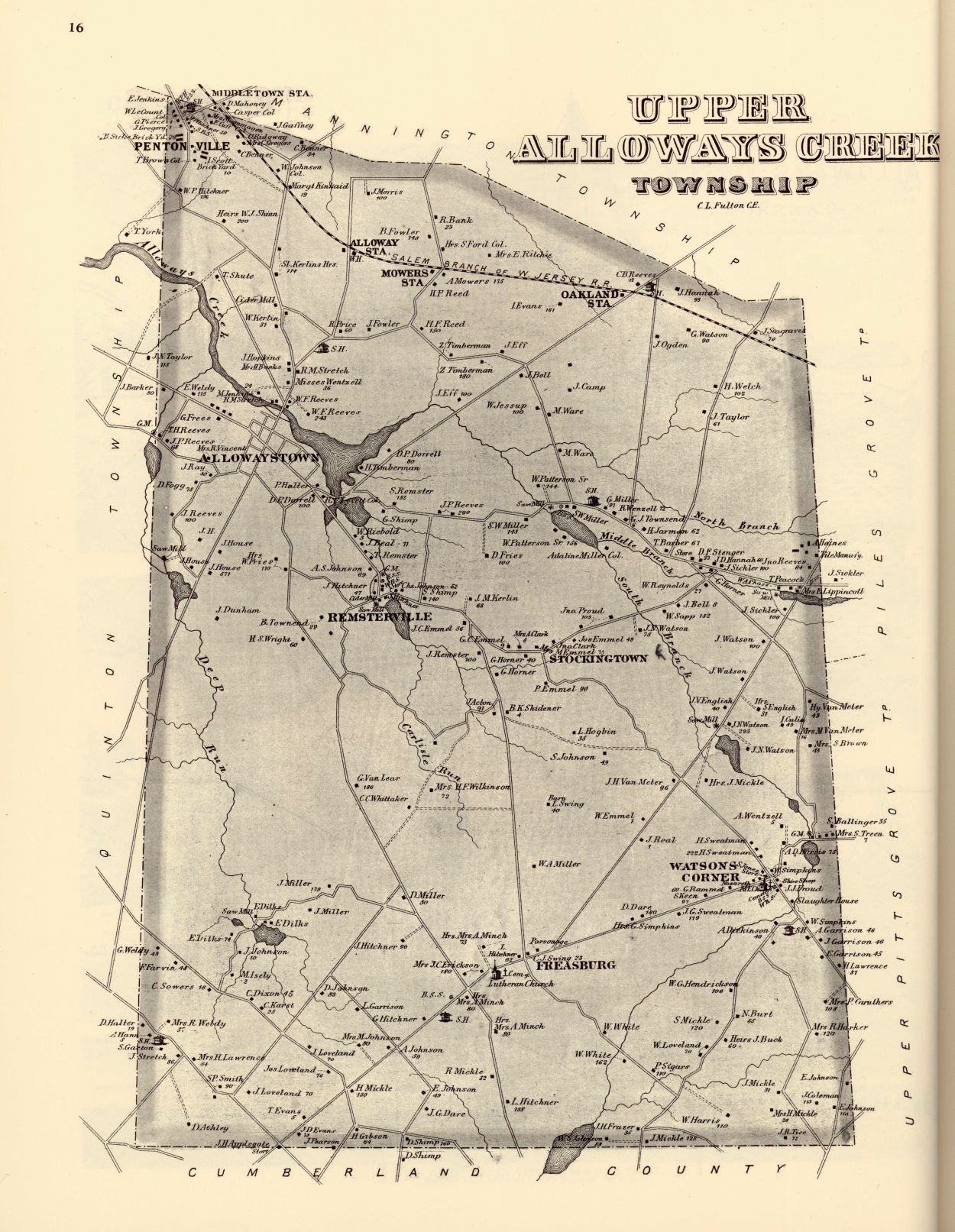
The name stuck, which says something about how much Bible was in everyday talk then, and how readily a Salem County village would carry a name that began as a writer’s pen name.
Aldine was Nazareth
Alloway’s neighbor to the northeast took its Biblical name more seriously.
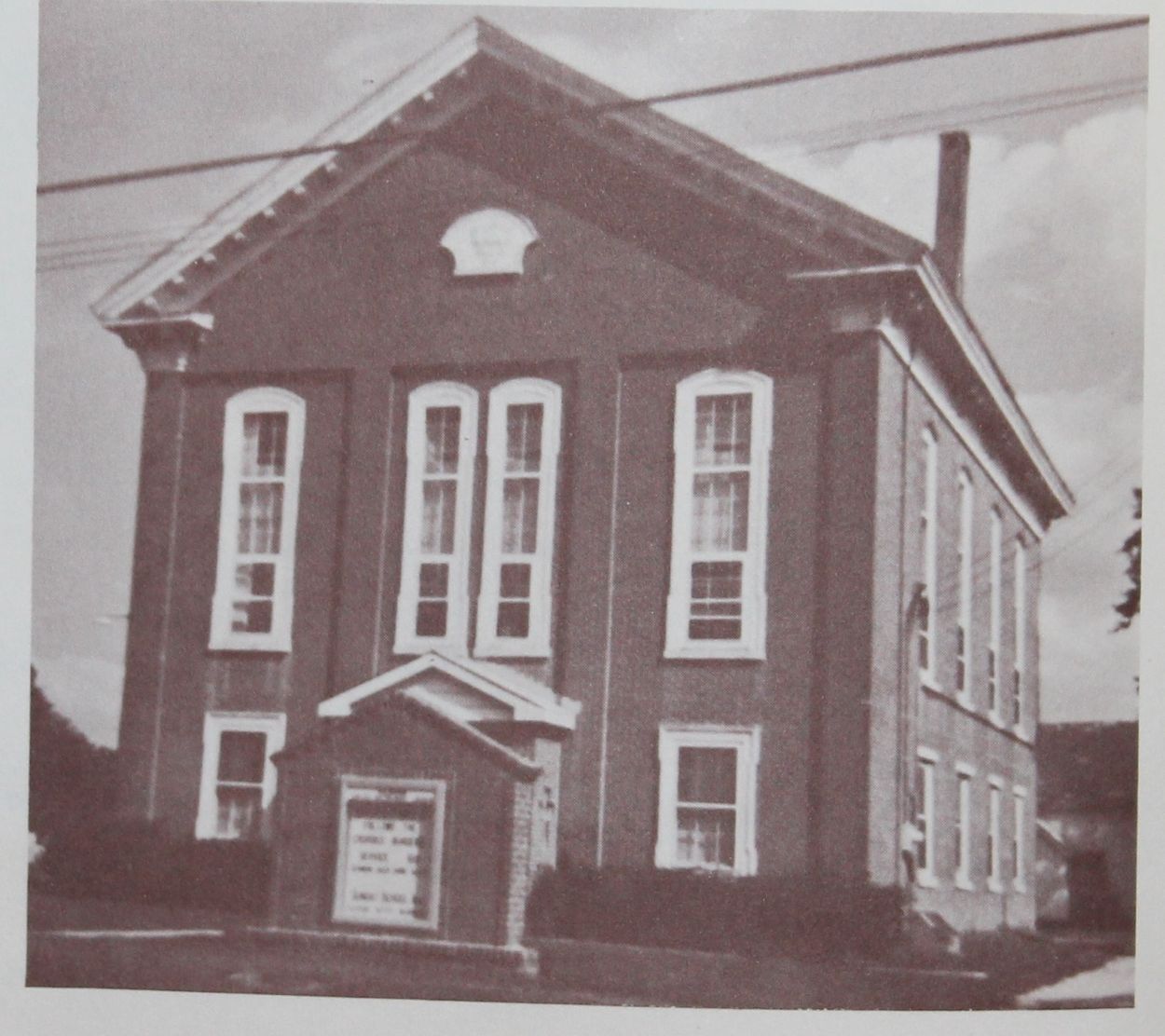
Aldine was known as Nazareth until about 1870 (the 1964 booklet says about 1869). The Methodist congregation organized there in 1841 as the Nazareth Church, meeting first in a school near Ballinger’s Mill on the Daretown Road. By 1847 the Salem Circuit counted 76 members at Nazareth.
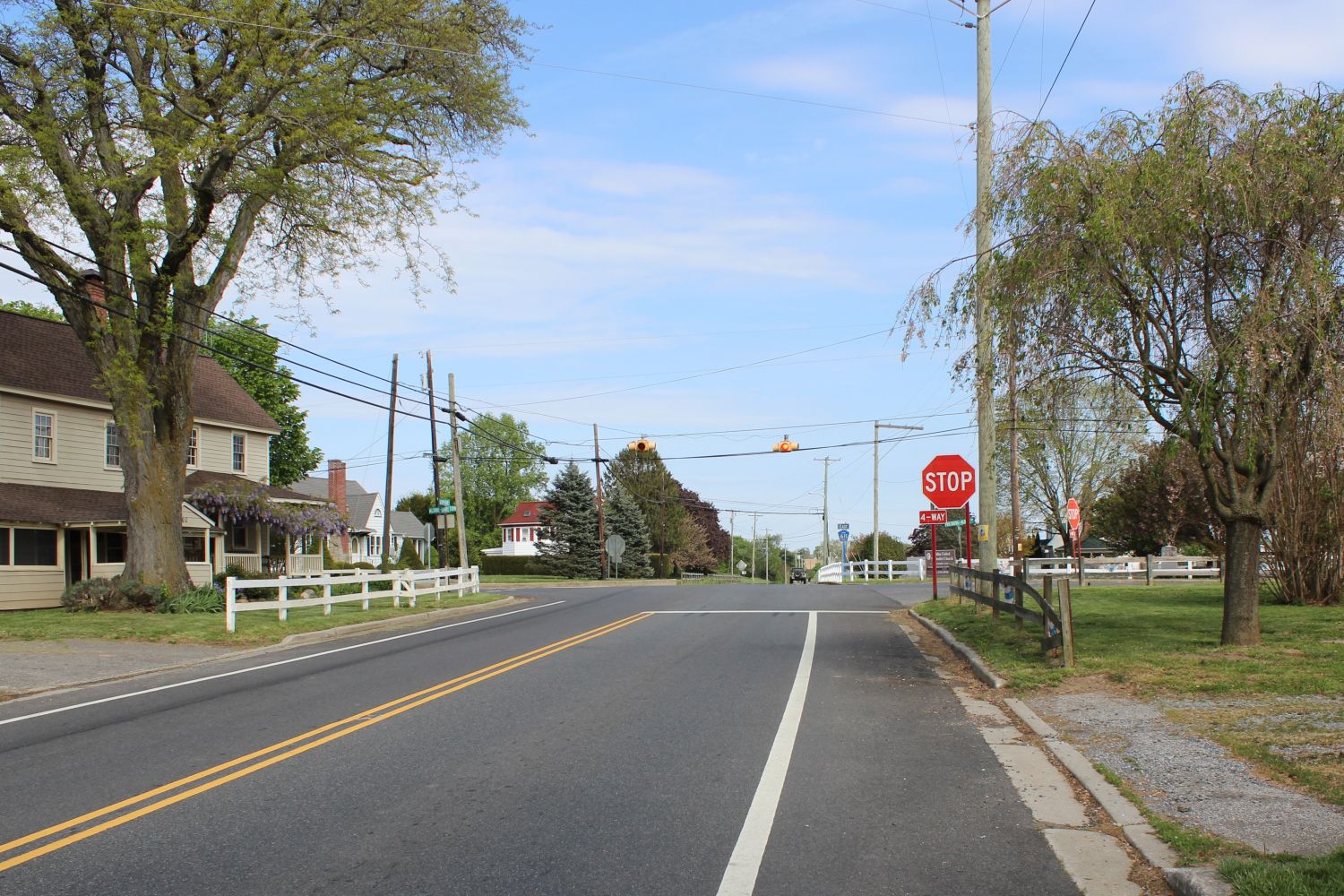
Then the village became Watson’s Corner, for John F. Watson. Around 1880, when the post office opened, it became Aldine. The current Aldine United Methodist Church building is dated 1868, came through an 1893 cyclone, and held its centennial services in April 1968.
New Jericho, and a road with a famous name
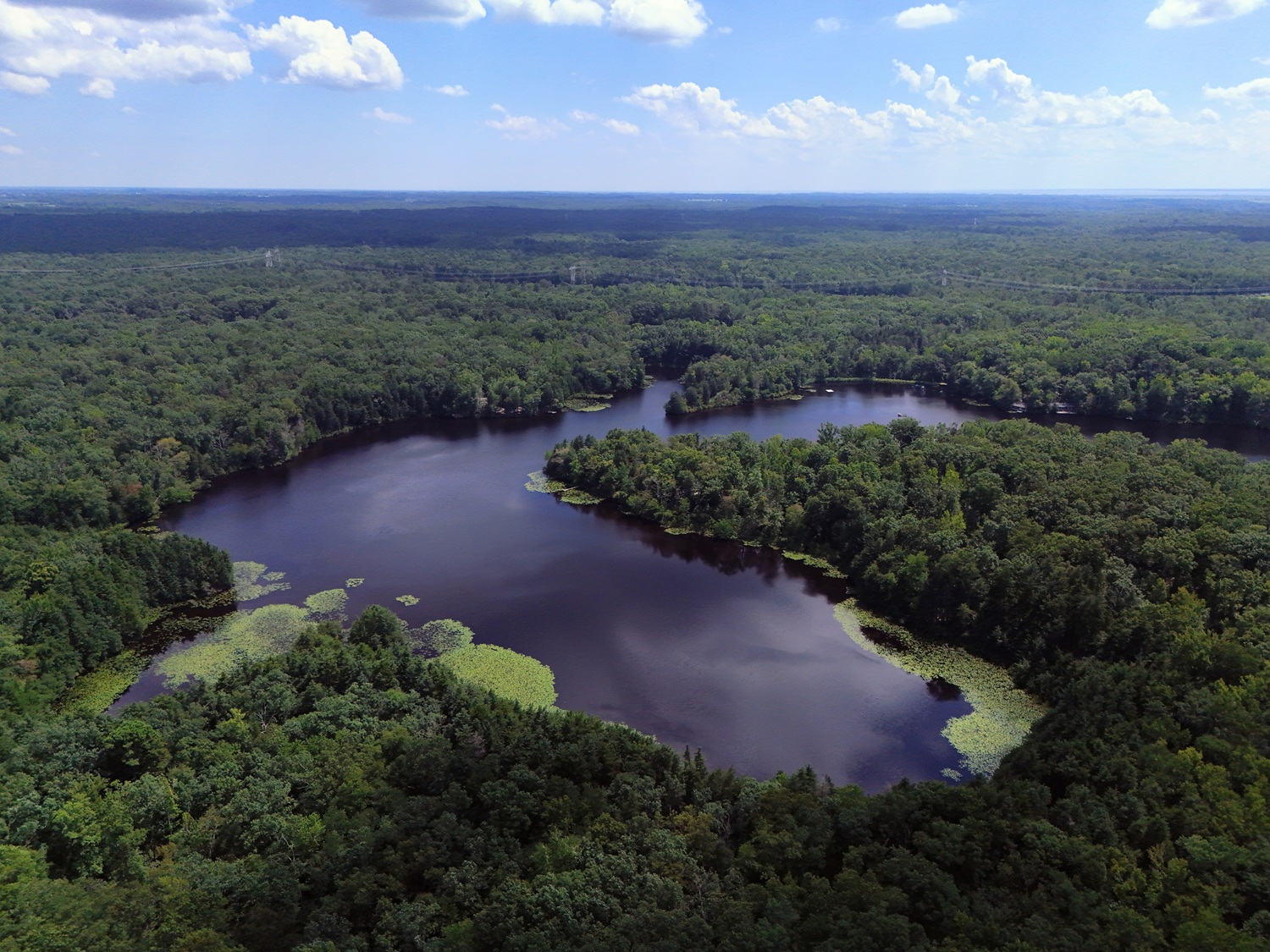
Down in the southern end of the county, near the Stow Creek line, there is a more famous Biblical name. In How Dear to My Heart, William J. S. Bradway’s “Journeys Around Jericho” series begins with the heading “Jericho, Biblical Name, Settlement by John Brick.”
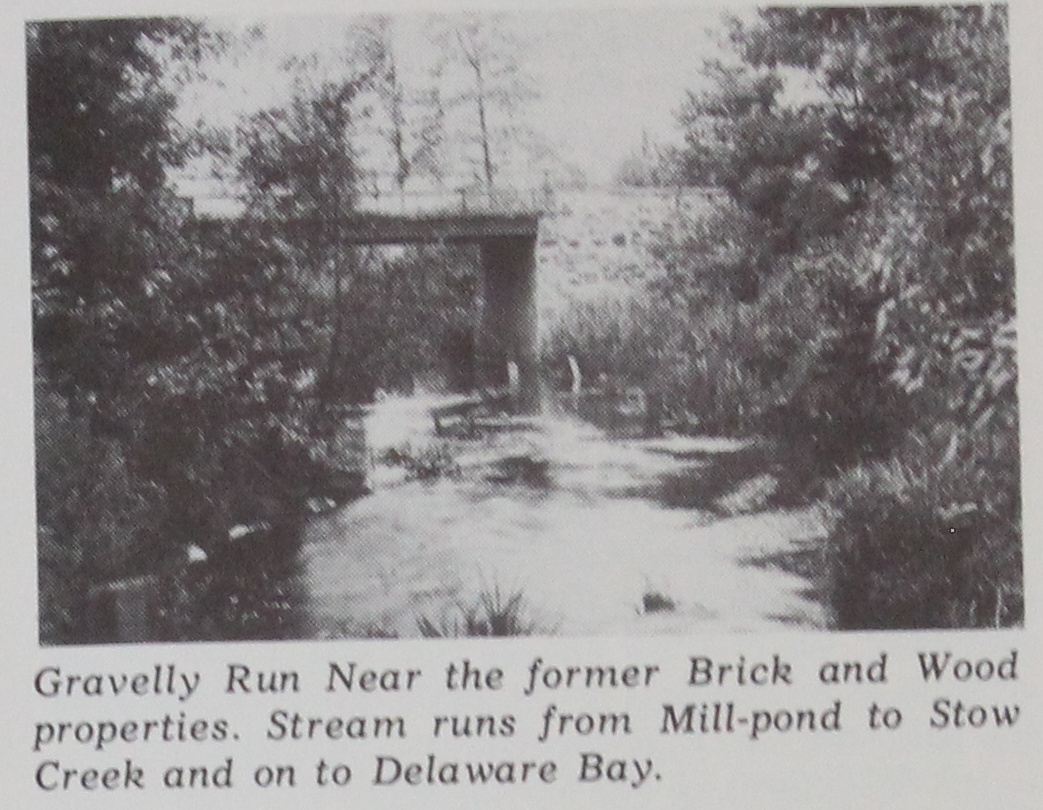
John Brick, an English Quaker, bought about 1,000 acres around 1690 at a spot the settlers called Gravelly Run. He bought it from Samuel Deeming, who had bought it from John Fenwick. The settlement grew into a village with homes, mills, shops, a hotel and a school, and it became known as New Jericho.
Jericho Road became an old stage road. One of its hills is called Coffin Hill, after a horse-drawn coffin that fell off the wagon on the rough road, and it was a halfway changing station between Bridgeton and Salem. Bradway opens his series by quoting a poem about the Good Samaritan, “It Was the Road to Jericho.”
The part I couldn’t find in the sources is why Brick’s settlement got that name. If you know, or your family knows, we want to hear it.
[PHOTOS: Jericho Road, Jericho Mill, from How Dear to My Heart; today’s Jericho Road sign] [MAP: Gravelly Run and Jericho on an old atlas, with a modern overlay]
And then there are the other names
Not every old name came from Scripture. Plenty came from how people actually talked. Here is a sample from the 1964 booklet and our archive:
- Elmer has been Ticktown, Pittstown and Terrapintown. It was named for Judge Lucius Elmer and became a borough in 1893.
- Harrisonville, outside Salem on the Pennsville road, is better known as “Pig’s Eye.”
- Pennsville was Kinseyville and Craven’s Ferry.
- Harmersville was Logtown, then Jaggers’ Corners, before Ebenezer Harmer opened a store there in the 1840s.
- Penton was Guineatown.
- Hancock’s Bridge was once nicknamed “Hague.” Nobody knows why.
- Marshalltown in Mannington was also Marshallville and Frogtown.
- Auburn was Lockerton, then Sculltown.
- Centerton was Dayton’s Bridge. Shirley was Swing’s Corners. Pole Tavern was Champney’s Corner and much more!
- Greenville was Pennytown. Harmony was Tattletown.
- Hell Neck, below Canton, got a new school district name, Friendship, after a Methodist preacher said the place deserved its reputation.
- In Salem, East Broadway was Bull Run, lower Fifth Street was Yellow Hell, and a row of boathouses on Fenwick Creek was Murderer’s Row.
A new a series from The News of Salem County: Old Names of Salem County
The Salem Standard and Jerseyman ran a similar series, “How They Got That Name,” back in 1931, and the author isn’t named in the sources we have. We’d like to bring it back, with your help.
Over the coming weeks The News of Salem County will look at these names one at a time, starting with the ones we can’t yet explain. Why did the early settlers call a farm village on a creek Jericho? Why “Hague”?
If your family has a story about an old name for your town, your road or your neighborhood, send it in. Message us on Facebook or email the newsroom, and tell us who told you and how far back it goes.